

Looking for tips on hydrangea care? We had LOADS of hydrangea bushes in our previous home and I always got tons of questions about them. So today I’m sharing answers to everything you’ve asked including tips on pruning, changing hydrangea colors, preventing deer from eating them, and more! (post includes commissionable links; for more information, see my full disclosure statement {here})
Pruning Hydrangeas
The most common questions I get about hydrangea care are when’s the best time to prune and how much can you prune off. How aggressive you can get with your pruning depends upon whether you have a variety of hydrangea that (1) flowers on old “wood” (stems from the previous year), (2) flowers on new wood (new growth from the current season), or (3) flowers on a combination of new and old wood (Endless Summer hydrangeas).
For hydrangeas that flower on old wood like these pink and blue mophead hydrangeas in our backyard,
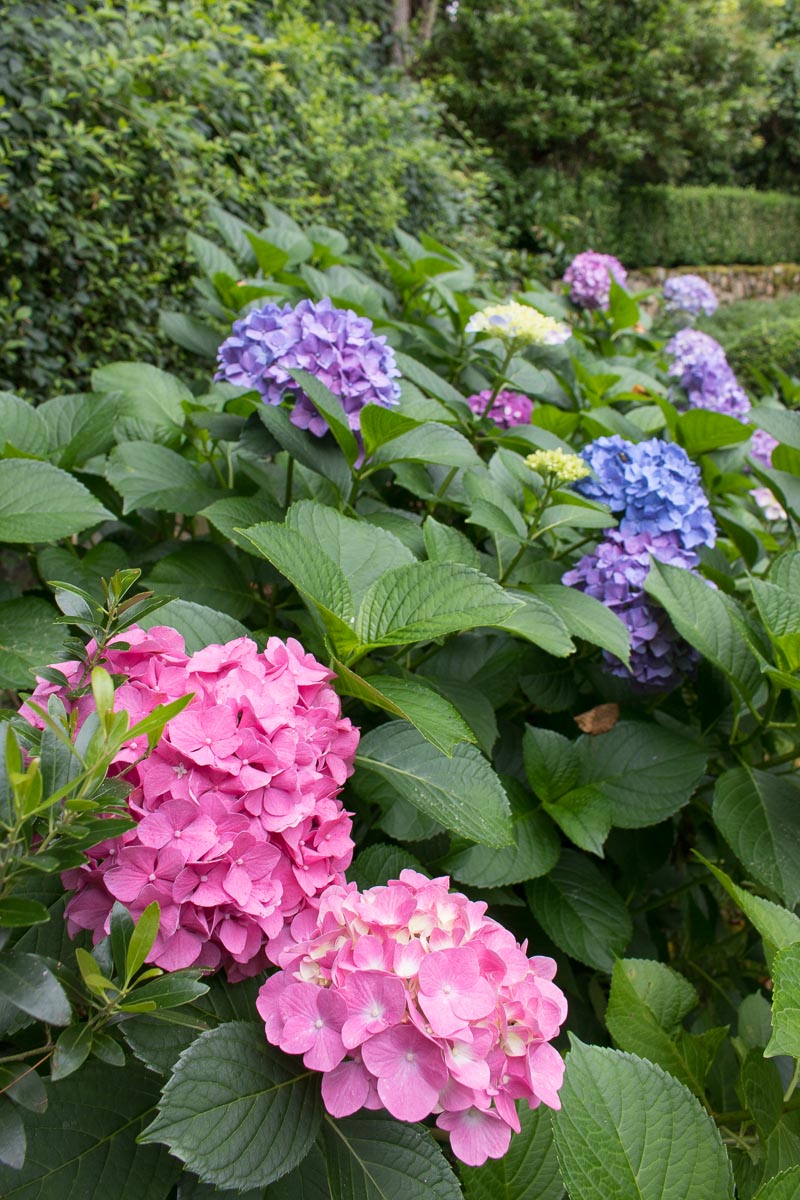
it’s ok to prune off dead stems or blooms at any time if you prune close to the bloom. But any more significant pruning should be done in the summer after your hydrangeas have flowered.
Why is this so important? Starting in late summer/early fall, the buds for next year’s blooms start to form so if you prune at that time, you’ll be cutting off those precious buds. The following spring you’ll end up with a big green leafy but bloomless hydrangea bush!
For hydrangeas that flower on new wood like Limelight hydrangeas or the Annabelle hydrangeas along the front walkway of our previous home, the entire bush can be cut to just a few feet from the ground in the fall or late winter/early spring (before spring growth begins) and they’ll still grow and bloom just fine the following summer. It’s ideal to do the pruning in late winter/early spring (since pruning can instigate new growth which you don’t want going into winter) but most will do fine with fall pruning.
We always pruned ours down in the fall since they grew so large by the end of the summer that they start taking over our front walkway and they consistently bloomed like crazy the following year. Can you believe that we cut these hydrangeas down to only a foot above the ground the fall before this?
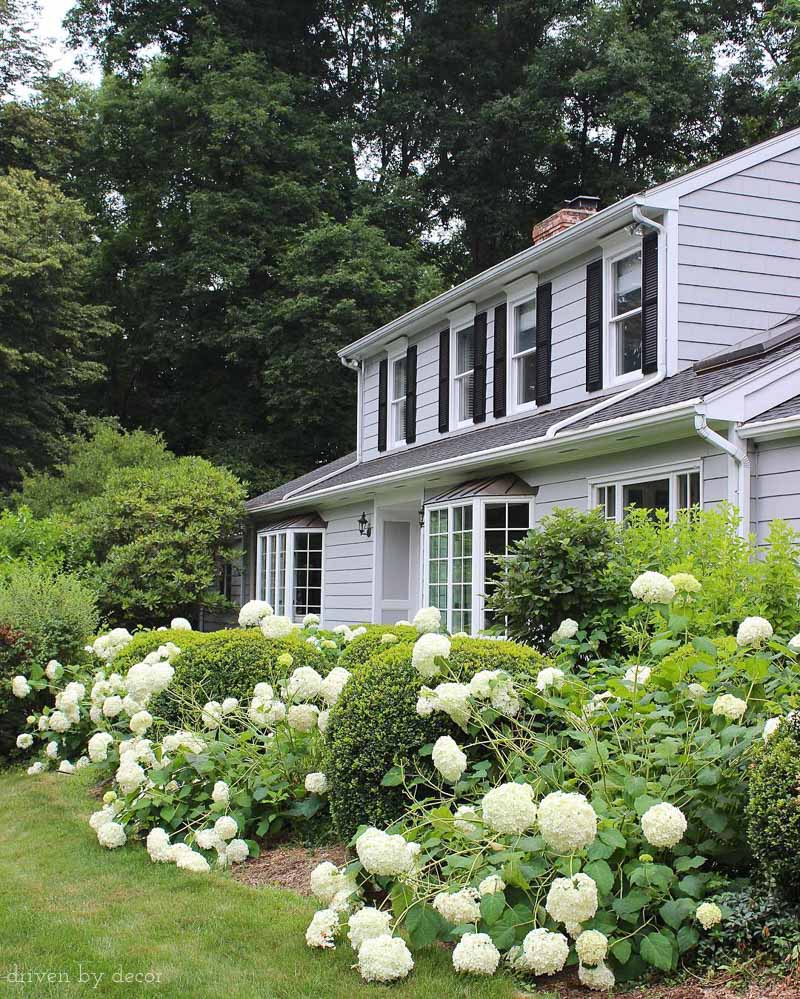
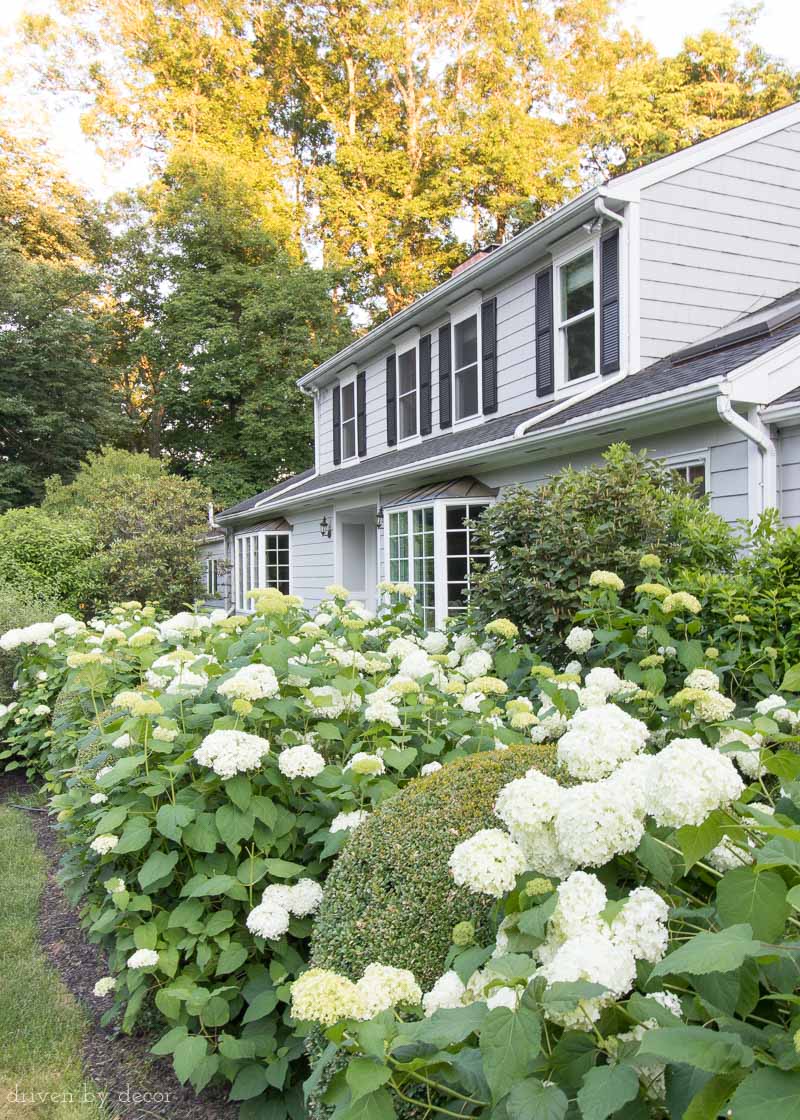
One of the negatives of Annabelle hydrangeas compared to some other types is that they have thinner stems and tend to be a lot more floppy. One little tip to pass on that we figured out by trial and error is to actually prune them to only about 2-3 feet from the ground instead of super close to it. While they grow back fine either way, we’ve found that leaving some of the old growth serves as a support for the new growth in the spring and summer so they’re not nearly so floppy.
You can see the difference in how much more upright they were the following year when we left a few feet of old growth when pruning the year before:
For hydrangeas that flower on a combination of new and old wood (Endless Summer hydrangeas), to maximize your blooms you’d want to prune them the same as I described for my mophead hydrangeas. If you prune them in the fall or spring instead, you’ll still get blooms from the flowers that bloom on the new growth but you won’t get as many because you will have pruned off some of the buds on the old growth that would have flowered.
What should you prune with for the best hydrangea care? My gardener (aka my husband) swears by {these pruners}. They have longer blades to get the job done quickly and telescoping handles that are super helpful for pruning taller hydrangea bushes.
Fertilizing Hydrangeas
An important aspect of good hydrangea care is fertilizing. Generally it’s best to fertilize your hydrangeas in the spring before they start growing and leafing out and then again during the peak growing season (depends on the climate but usually July).
The instructions on many fertilizers recommend more frequent fertilization but I tend to err on under-fertilizing vs. over fertilizing. You definitely don’t want to fertilize them within 1-2 months of the frost date for the zone you live in. Fertilizing that late in the season encourages new growth that won’t survive through winter in most climates.
The fertilizer that I’ve used with the most success is Jack’s Blossom Booster – my hydrangeas have done extremely well with it!
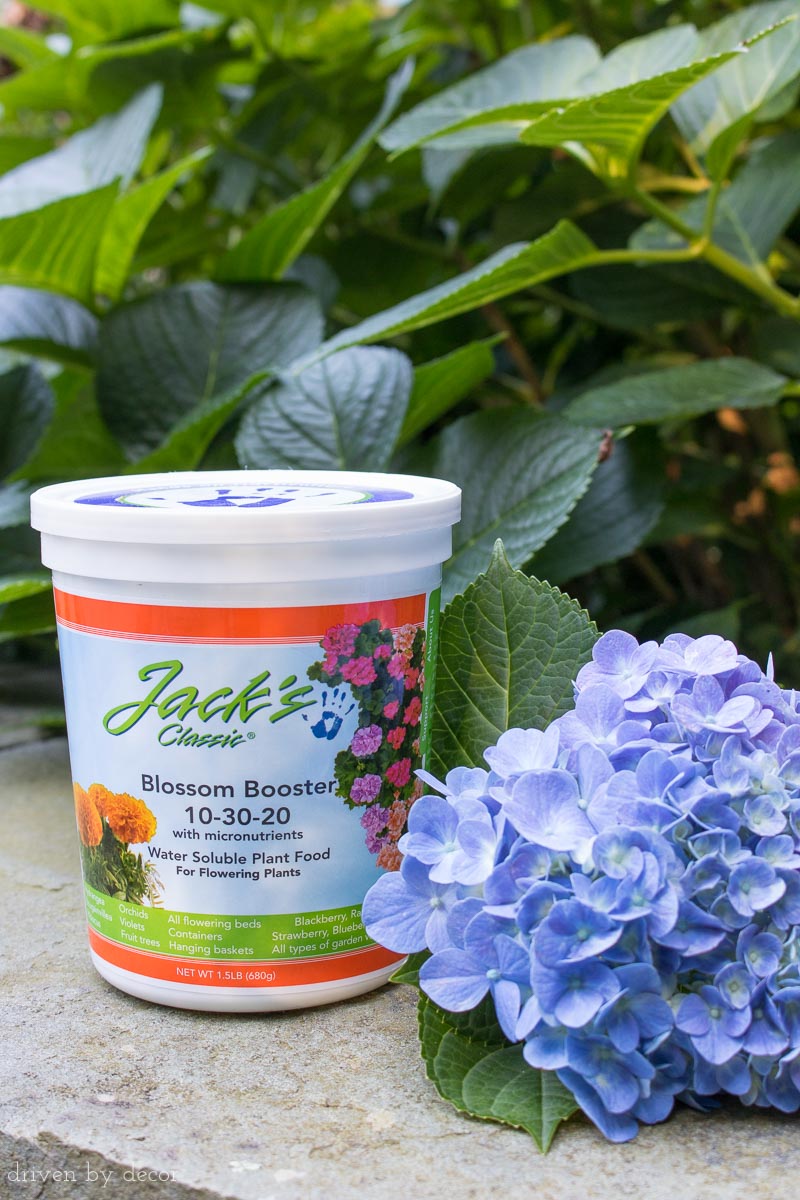
It’s important to not dump the fertilizer at the trunk of your hydrangea – instead spread it over the “drip line” of the hydrangea (the area under the branches that encompasses the entire width of the bush). Be sure to water your fertilizer in or apply it right before rain is predicted.
Changing the Color of Hydrangeas
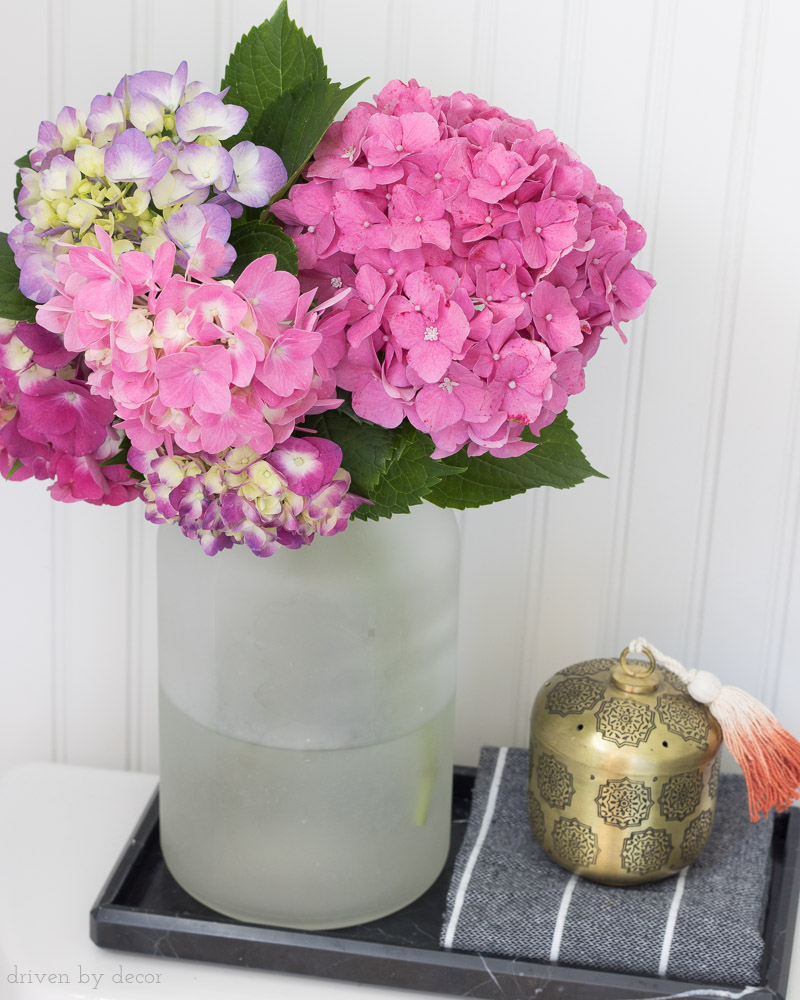
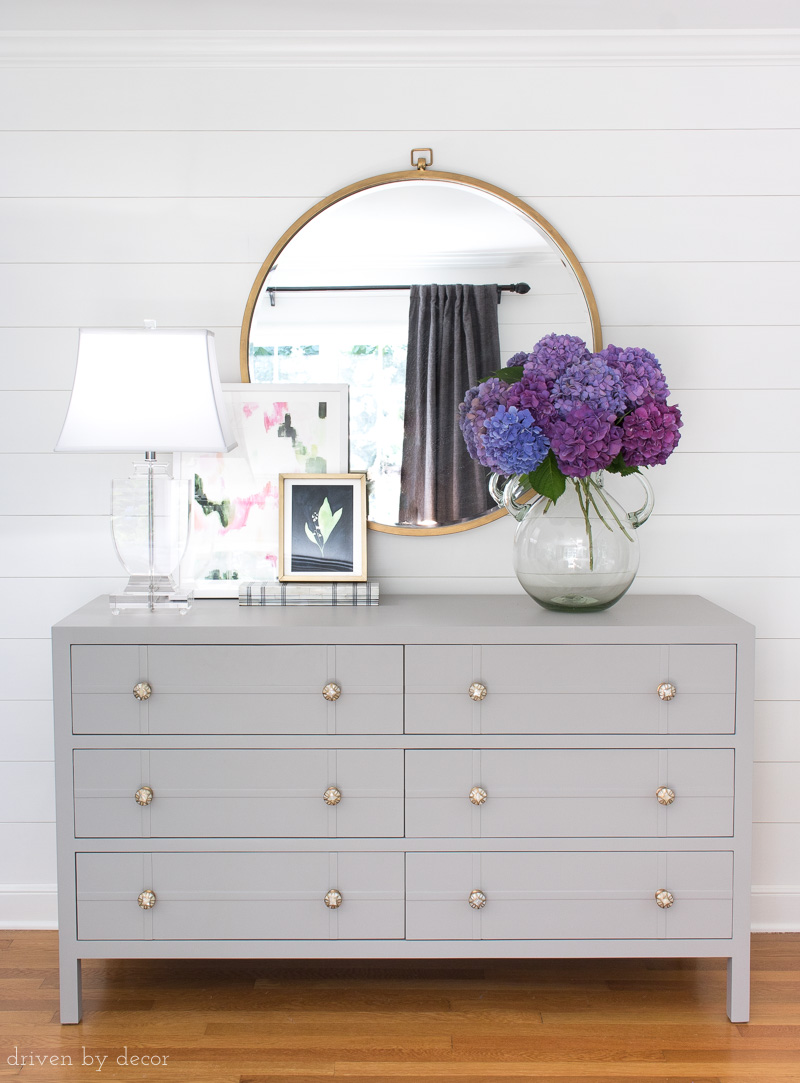
The color of a hydrangea’s blooms depends upon the pH of the soil they’re growing in (unless they’re white, in which case they’ll always be white!). When the pH level in the soil is higher, you’ll get pink blooms and when pH levels are lower, you’ll get blue blooms. The pH can change from year to year depending upon things like the type of fertilizer or mulch that you’re using.
Some years every single hydrangea in our backyard were a pale blue/purple but other years we got some gorgeous pinks:
along with some seriously stunning deep purples:
Did you know that there’s actually a way to tweak Mother Nature’s plan and get the color blooms that you prefer? If you want pink blooms you can raise the pH by sprinkling garden lime such as {this} near the base of the plant.
If you want blue or purple blooms, you can lower the pH by applying a soil acidifier such as {this}, aluminum sulfate (available {here}), or a fertilizer with micronutrients to enhance blue flowers like {this}. I’ve also heard that coffee grounds can do the trick! The key is to apply them early in the growing season and re-apply throughout the growing seasons but water them in well and don’t go overboard because too much can harm your plants.
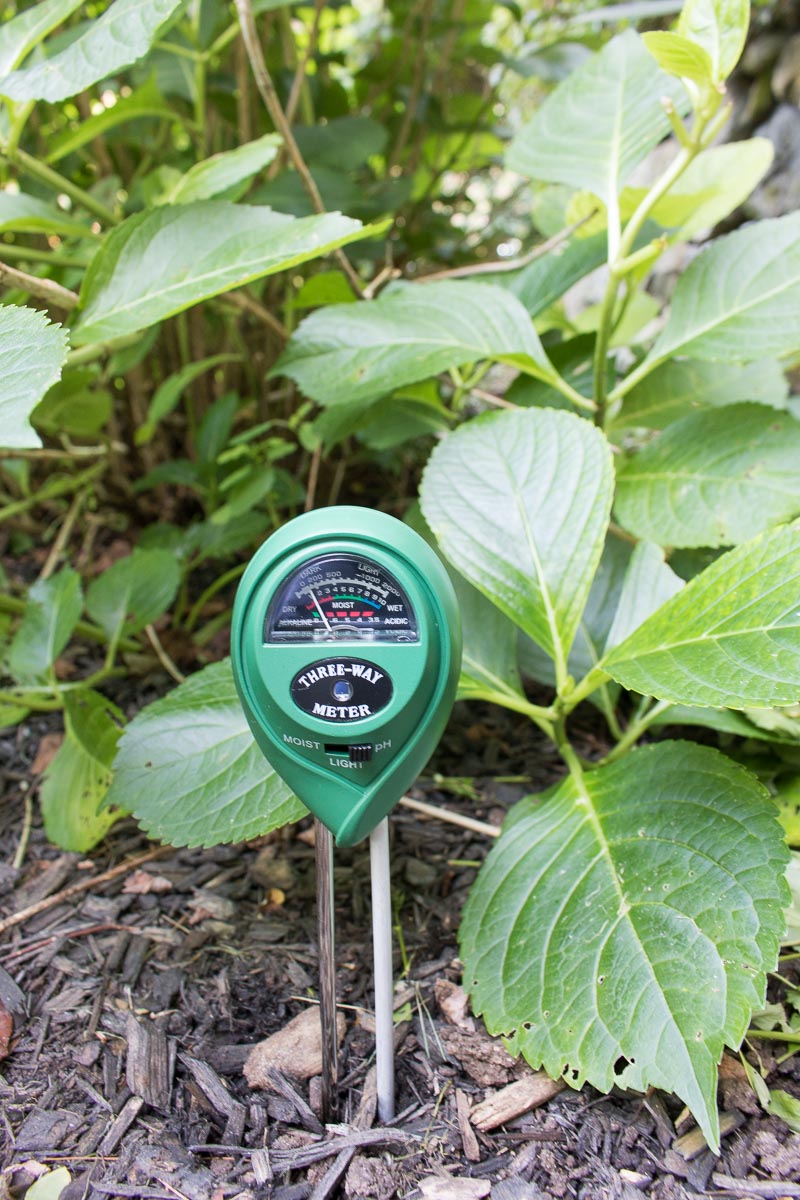
If you want to monitor your soil’s pH during the growing season you can use a probe like {this one} that gives readings on both the pH of the soil and the moisture content:
How To Keep Deer from Eating Your Hydrangeas
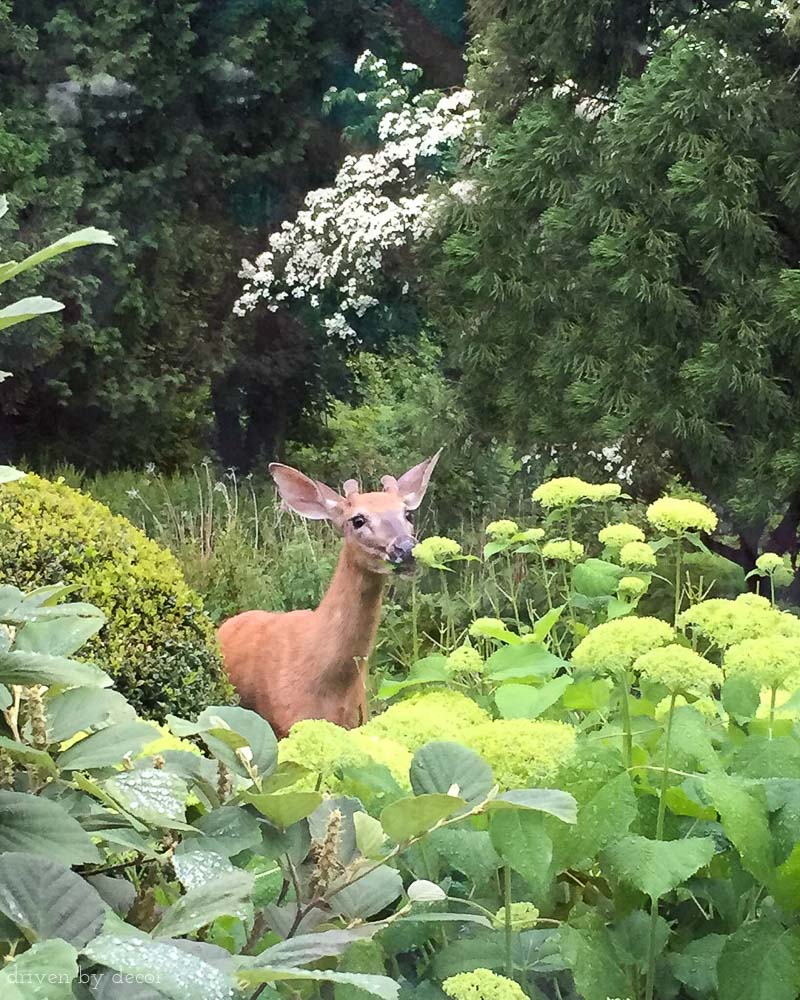
You can put all of my hydrangea care tips into use but they won’t do you any good if you have critters eating them! We had lots of deer that wandered through our yard and they LOVED to eat my hydrangeas, especially right after they’ve just started to bloom. My daughter took this pic of one of the culprits outside of our front window one day when I had neglected to spray my hydrangeas recently:
I’ve tried a few different things to keep them away but the one that works best for me is Bobbex in a ready-to-use pump sprayer (available {here}). It is truly the most disgusting smelling stuff ever but it does the job! I spray mine early on in the season before my hydrangeas start blooming and then once a month throughout the growing season. Between our front and backyard we have a ton of hydrangea bushes but it only takes me about 15-20 minutes to spray them all. You can read more about using Bobbex along with other tips for repelling deer in my post on how to keep deer from eating flowers and plants.
How To Make Cut Hydrangea Blooms Last
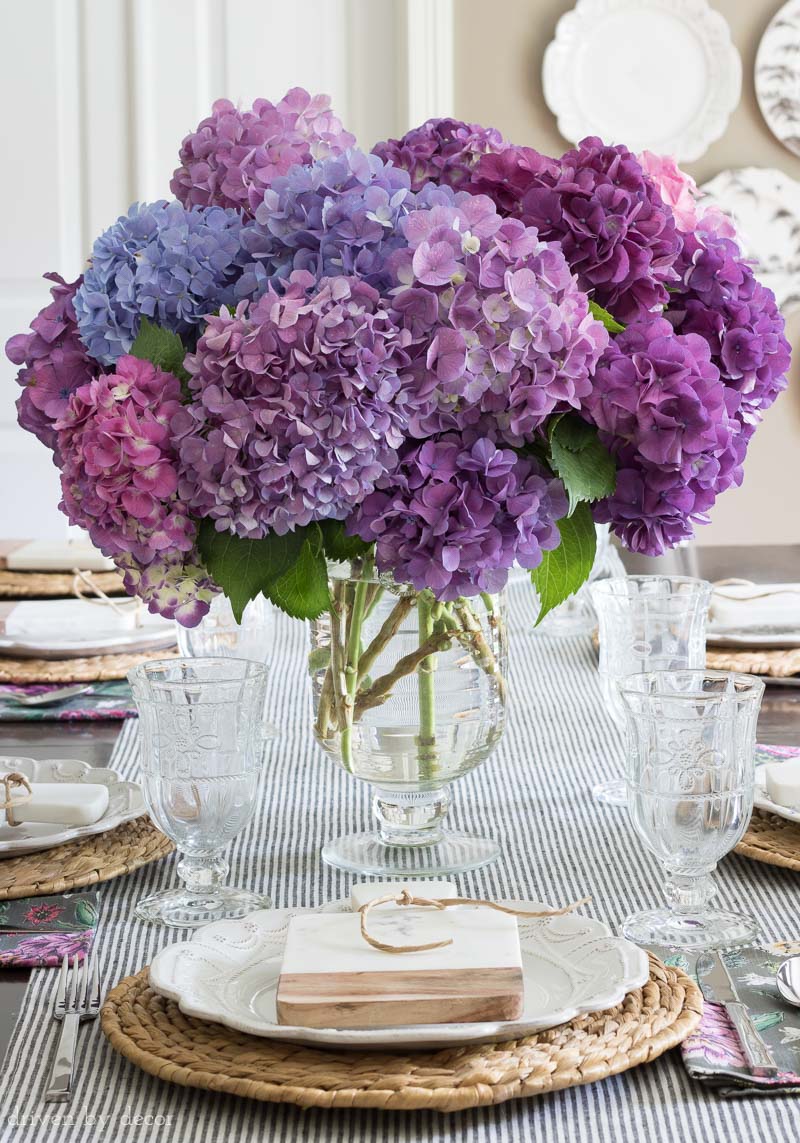
It’s so disappointing to have a beautiful bouquet of hydrangeas that starts wilting just a few days after you put it together. Here’s what I do that helps keep my cut hydrangea blooms last (sometimes for two weeks or more!):
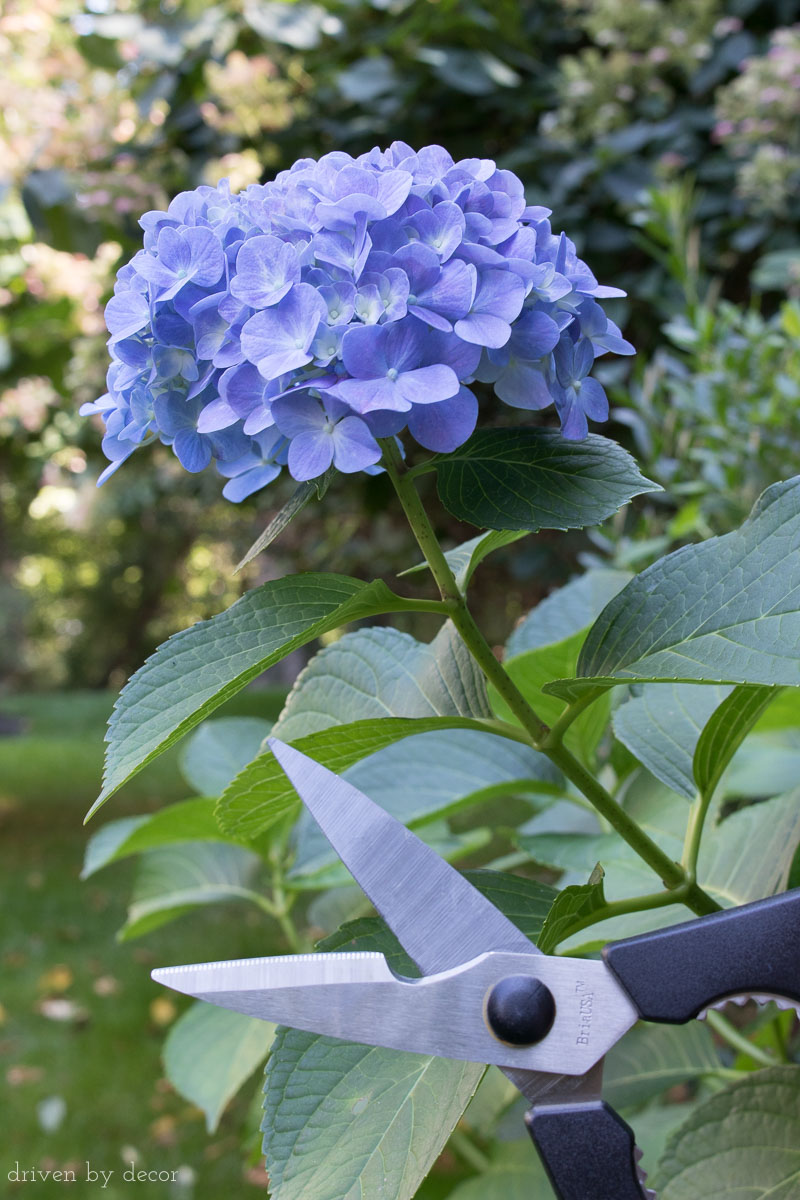
- Clip your blooms in the morning and cut the stems on the diagonal. A lot of gardeners recommend using a knife but I’ve always found that to be difficult and awkward. Instead of using typical garden pruners, I like using {these kitchen scissors} – by cutting the stems near at the base of the scissors where there’s a semicircle, it acts like a guillotine and gives a clean cut without crimping the stem. And the two blades pull apart so you can throw them in the dishwasher for easy cleaning.

- Remove any leaves that will be below the water line of your vase – this helps keep away rot and bacteria.
- Use a vase that has been washed in warm, soapy water (not just quickly rinsed out from its last use).
- Add a packet of flower preservative to the water if you have it or, if you want to go all out, dip each stem in boiling water for 30 seconds and then in Alum powder (available in the spice aisle at grocery stores) before putting them in your vase.
- Change the vase water every other day.
How To Revive Wilting Hydrangeas
While most of my hydrangeas do well using the tips I outlined above, I sometimes get an outlier or two that unexpectedly wilts just a few days after being cut. There are several different ways to revive wilted hydrangeas like dipping their tips in boiling water or submerging the whole bloom in cool water overnight but the trick that works just as well for me and is easier is to simply recut the stem (on the diagonal again) and put it in a glass or small vase of very warm water (I use the hottest water that I can get from the tap) for several hours.
This will typically perk up your bloom by the end of the day at which time he can rejoin his friends in the bouquet!
And finally, I’m wrapping up my hydrangea care tips by answering the question I get the most…
Why Didn’t My Hydrangeas Bloom this Year?
It is SUCH a bummer when hydrangea season rolls around and your bushes start to grow and get big and leafy but…. there are no blooms. Here are a few of the reasons it can happen:
- Pruning at the wrong time. If you have hydrangeas like mopheads that grow on old wood and you pruned them too late in the season the year before, you probably inadvertently removed the buds that had started to develop for the following year.
- Using too much fertilizer. Some fertilizer is a good thing but too much is not! Don’t over do it.
- Frost damage. A late frost can damage developing buds so that they never bloom. In cold climates, before winter you can try mounding up mulch or straw about a foot high around the base of the bushes to protect and insulate the developing flower buds.
- Too much shade/not enough sun. Hydrangeas need a certain amount of sunlight to bloom so if yours isn’t getting several sunny hours a day, that could be the problem – you might need to try a different spot in your yard.
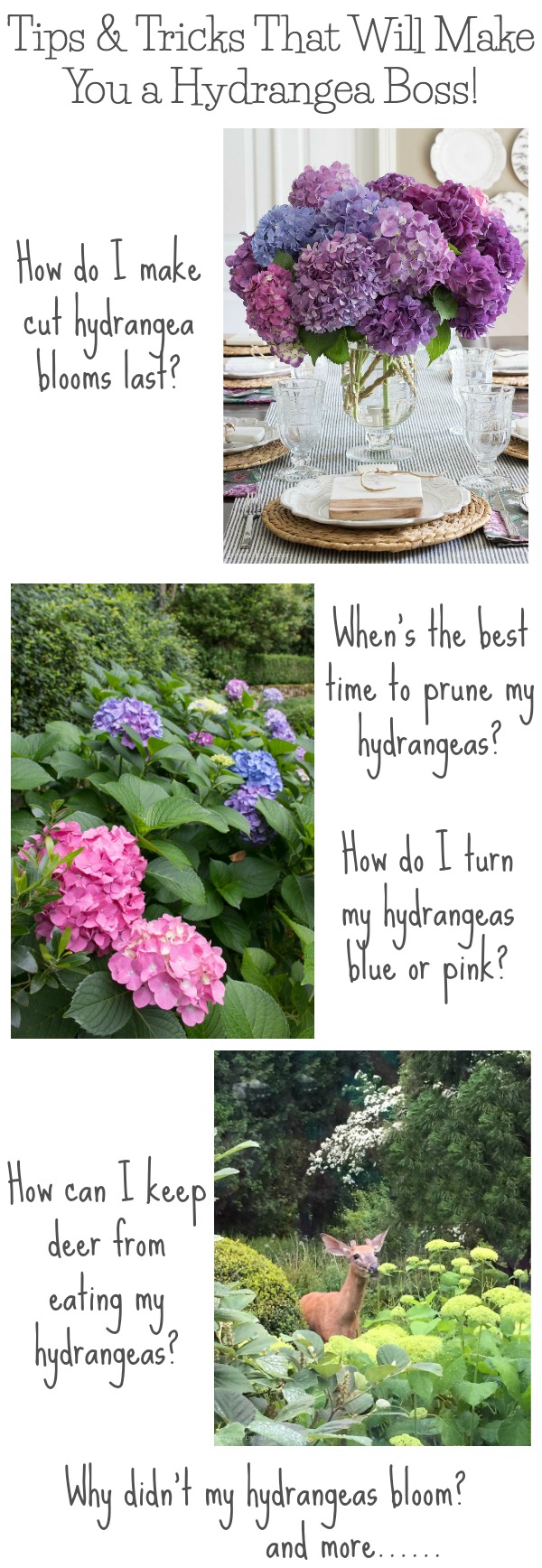
If you want to save the link to this post so it’s easy to find when spring rolls around, I created a Pinnable image at the end of this post! If you want other tips on getting your outdoor spaces spring-ready check out this post:
Simple Outdoor Decorating Ideas
XO,




Brenda says
That is probably one of the best, most thorough articles I have ever read on hydrangeas!! I’m going to print this out and save it! I can’t wait to get to my hydrangeas this year…. now if it will only stop snowing….??
Kris Jarrett says
You are so sweet – thank you! And I can’t believe you’re still getting snow!!!!
Joanne says
My hydrangea blooms begin with a light green color; changing to blue. Now that it is fall they are pink, changing to a beautiful rust.
One stem is much taller from the rest
How do I get them ready for the winter. I live East Central Minnesota.
Thanks.
Joanne
Kris Jarrett says
Joanne, unfortunately I’m no expert about winter prep in a climate as cold as yours. It gets pretty cold here and even in the coldest of winters mine have done fine! The one problem I have had is a late frost after it has warmed up in the spring and my hydrangea buds are growing – I now throw sheets over them when that happens to protect them so they’ll still bloom!
Teresa Johnson says
My Aunt Bell had aushiemers and she cut back the hydrangea with a butcher knive several year s back ,it grows to about 3 ft. Every year but has never bloomed again what do I do. All O k ow is the flower waa purple.
Kris Jarrett says
Hi Teresa, If it was a purple flowering one, cutting it all of the way back would have definitely caused it to not bloom the next year but I’m not sure why it wouldn’t bloom the year after that. Just be sure you aren’t even trimming it up late in the season. Totally leave it alone and you should eventually start seeing blooms again. It could just be that the blooms got killed off this past year or two by a late frost, too much fertilizer, or one of the other reasons I mentioned in my post.
Sharron says
I don’t know what state you live in, but in the San Joaquin Valley in California hydrangeas grow only in complete shade, other wise the leaves and blooms burn. Unfortunately they only bloom in early spring for a couple of weeks. This year we only got a few blooms as we had a heat wave of 100+ just at the time they were ready to bloom. It sounds like central Calif is not the only place that didn’t have blooms this year. Fortunately, my wisteria bloomed almost all summer and that is rare!
Kris Jarrett says
That’s interesting – I’m currently living in CT but have also grown them in Ohio and NC and in all cases they got some sun during the day. It sounds like you get some serious heat there – glad your wisteria thrived in it!
Georgina Aust says
Help! Nobody has told me what to do with my lace cap. It’s gone woody with no leaves untill the top and then a flower. I’m worried that if I cut back to the bottom next year will be flowerless.
Laurie says
Thanks for the tips. My hydrangeas got huge this year but never bloomed this summer (I live in MA) and I was forced to trim them back this weekend because they got too big so I hope I didn’t mess them up for next year. I have Nikko blues. They usually bloom like crazy, but this year nothing bloomed (not my wisteria, my rhodendrons, my variegated weigelas). I think the weather has something to do with it–cool and wet summer for us.
I love, love your gardens (and your house). You have a beautiful home and great taste.
Kris Jarrett says
It’s so frustrating when you have all sorts of beautiful plants and they don’t bloom – we had a very late frost last summer so that happened to me with a bunch of our hydrangeas. Hopefully everything will grow well for you next year!
Calypso in the Country says
What a great post! We get tons of deer so I am definitely trying the Bobbex. I will be spraying everything! As soon as I get my fall mums for the porch, I think I will try it out on them first. In previous years, the deer get so daring that I find them on my front porch munching away! I’ll let you know how it works. Thanks Kris!
Shelley
Kris Jarrett says
I would definitely recommend it Shelley – just be prepared to shower immediately after using it. It is seriously the stinkiest stuff ever!
Lisa says
Awesome awesome awesome post Kris!! I already saved it so I can come back and re-read. One variety of our hydrangeas didn’t bloom at all this year, and I’m all over tending to them for next year. Thanks so much for all these great tips and details! Yours are absolutely amazing!!
Kris Jarrett says
I’m so glad that you found it helpful Lisa! I hope you have better luck with your finicky hydrangeas next year!
Deakyne Terry says
Did not see anything on my Oak Leaf hydrangea. I am in coastal South Carolina, my huge plant is 3 yrs old. Can you give me instructions on pruning this type as well please? And in zone 8B. Thanks very much.
Kris Jarrett says
Oak leaf hydrangeas bloom on old wood so you’ll want to follow the same pruning instructions as I talked about for my mophead hydrangeas!
Beverly M says
I loved your post today!
We live in east TN and have 37 hydrangeas in our yard as well as an abundance of hosta and day lilies – all of which are literal desserts for deer. The only way we’ve been able to deter deer is to put hair clippings my hairdresser collects for as she sweeps her floor. I get a trim every 5 weeks and this has worked ever since we began doing it about 4 years ago. We’ve been told that the human scent remains on hair for approximately 2 months. We just tuck it here and there – under the leaves,between the stems, in the mulch and on the ground and we’ll never have to go back to buying a deterrent since the hair clippings are free. The color of the hair determines where it’s placed.
My Mom taught me to be certain to remove all the fallen leaves from between the stems near the ground because they tend to collect more rain, snow or ice and will cause more stems to freeze during the winter. Knowing this has made a huge difference with blooming.
Kris Jarrett says
I’ve heard that about hair clippings but never tried it – good to know it works! And that’s really interesting about the leaves near the stem because I know some people who actually pile up mulch and leaves around the base to insulate them during the winter. But sounds like removing all of them has done the trick for you!
Nancy says
I have used Bobbex for years. It is the only thing that I have found that works. I have found spraying every 7-10 days has been best for me. Rain does not wash it off as long as it isn’t going to rain within 8 hours.
Kris Jarrett says
I’m glad that you’ve had luck with it too! It is so disgusting smelling isn’t it?! I can’t blame those deer I sure wouldn’t eat blooms sprayed with it either – ha!
Karen B. says
Kris,
I had read some of these tips but the one that helps me the most is the reviving wilted blooms. I was using a method that was too much trouble (submersing the bloom for a time and then placing the cut stem in hot water). Your method sounds much easier. Truly, I stopped buying hydrangea at the market because of the wilt issue.
In our new house I have only hydrangea in large planters. I plan to plant 3 more (in the ground) next spring.
Thanks for the great info.
Karen
Kris Jarrett says
I tried that method of submersing blooms too and it was just too much of a pain – I don’t have a laundry room sink so didn’t have an easy place to do it. Let me know how the hot water method works for you! Enjoy your weekend Karen!
Ivory says
These are fabulously. I love them all. Wish I can grow these, but never been able to keep them alive no matter what I do. Thank you for all your wonderful tips, suggestions, and ideas to grow beautiful hydrangeas
Kris Jarrett says
Thanks Ivory! I’m lucky that we live in a climate where they really thrive – in other areas it’s not so easy!
Patty says
Can a hydrangea be transplanted after being in the ground for about 5 years?
Kris Jarrett says
Hi Patty,
Unfortunately I’m not sure – I would guess it can because I’ve split some of mine after several years and transplanted half of them but I’m no expert in this department and would hate to give you the wrong advice! 🙂
Michelle H. says
This is a great article! I had a Annabelle shrub planted in front of my home this summer (I’m a newbie to this variety hydrangea) so the pruning tip is appreciated. I’ve been lucky that the deer we get in our yard have been kind to my hydrangeas but not so much to my Arborvitae. I’m going to try the Bobbex spray this fall/winter. Thank you for all the tips and tricks!
Kris Jarrett says
The Bobbex works really well for me! Hopefully the deer will continue to stay away from your Annabelles – the first two years I lived here the deer didn’t touch mine (and I didn’t spray) but the next summer they totally mowed them down – I was so sad! Now I spray religiously!
Jolene says
Thank you for sharing all of these helpful tips about hydrangeas. I love them and want to help the three bushes I have to better. I pinned your article to help me out.
Kris Jarrett says
Thanks Jolene! So glad you found it helpful!
Shelly Mathes says
Thank you Kris for the article on Hydrangeas, so much good information. I am going to give it a try for sure. I saw a house a few days ago in a close neighborhood nearby, full of limelight Hydrangeas on a north side flowerbed. Beautiful to say the least. Do you happen to know anything about the Limelights? I’m going to read up on those. Thank you for the great article.
Kris Jarrett says
Hi Shelly! The Limelights are just like the Annabelles and grow on new wood so they’re a lot less finicky! They tend to be pretty easy to grow so are a good variety to try!