

Looking for tips on hydrangea care? We had LOADS of hydrangea bushes in our previous home and I always got tons of questions about them. So today I’m sharing answers to everything you’ve asked including tips on pruning, changing hydrangea colors, preventing deer from eating them, and more! (post includes commissionable links; for more information, see my full disclosure statement {here})
Pruning Hydrangeas
The most common questions I get about hydrangea care are when’s the best time to prune and how much can you prune off. How aggressive you can get with your pruning depends upon whether you have a variety of hydrangea that (1) flowers on old “wood” (stems from the previous year), (2) flowers on new wood (new growth from the current season), or (3) flowers on a combination of new and old wood (Endless Summer hydrangeas).
For hydrangeas that flower on old wood like these pink and blue mophead hydrangeas in our backyard,
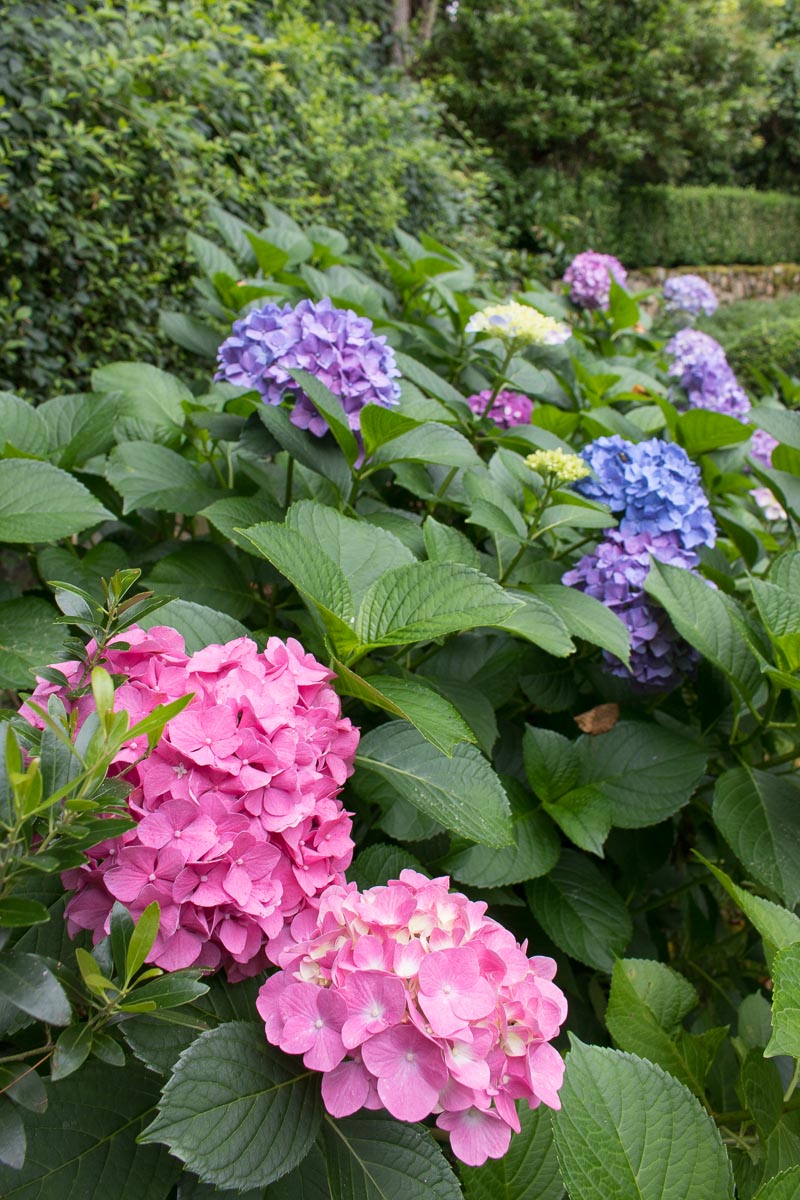
it’s ok to prune off dead stems or blooms at any time if you prune close to the bloom. But any more significant pruning should be done in the summer after your hydrangeas have flowered.
Why is this so important? Starting in late summer/early fall, the buds for next year’s blooms start to form so if you prune at that time, you’ll be cutting off those precious buds. The following spring you’ll end up with a big green leafy but bloomless hydrangea bush!
For hydrangeas that flower on new wood like Limelight hydrangeas or the Annabelle hydrangeas along the front walkway of our previous home, the entire bush can be cut to just a few feet from the ground in the fall or late winter/early spring (before spring growth begins) and they’ll still grow and bloom just fine the following summer. It’s ideal to do the pruning in late winter/early spring (since pruning can instigate new growth which you don’t want going into winter) but most will do fine with fall pruning.
We always pruned ours down in the fall since they grew so large by the end of the summer that they start taking over our front walkway and they consistently bloomed like crazy the following year. Can you believe that we cut these hydrangeas down to only a foot above the ground the fall before this?
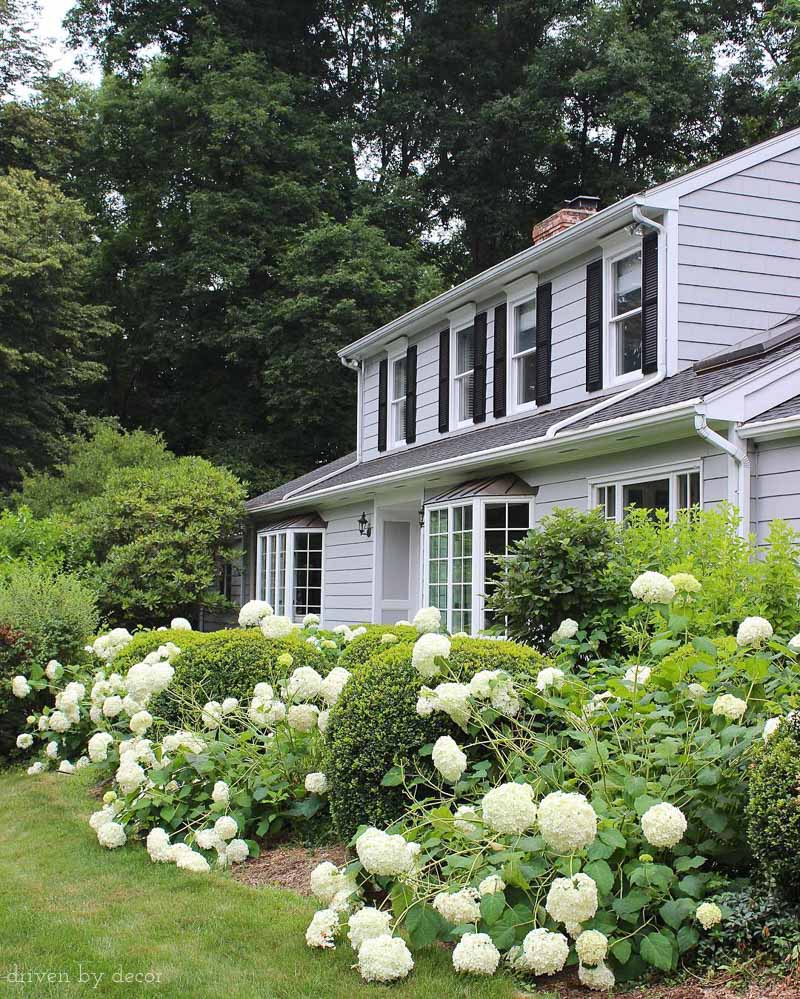
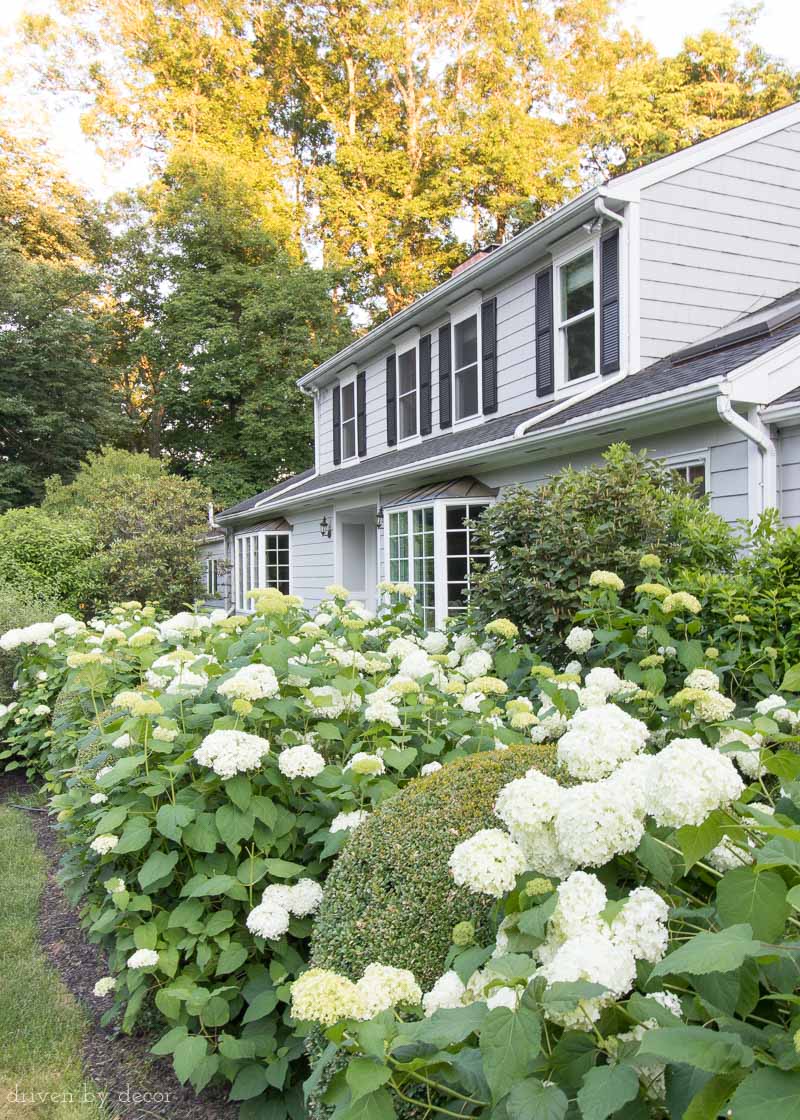
One of the negatives of Annabelle hydrangeas compared to some other types is that they have thinner stems and tend to be a lot more floppy. One little tip to pass on that we figured out by trial and error is to actually prune them to only about 2-3 feet from the ground instead of super close to it. While they grow back fine either way, we’ve found that leaving some of the old growth serves as a support for the new growth in the spring and summer so they’re not nearly so floppy.
You can see the difference in how much more upright they were the following year when we left a few feet of old growth when pruning the year before:
For hydrangeas that flower on a combination of new and old wood (Endless Summer hydrangeas), to maximize your blooms you’d want to prune them the same as I described for my mophead hydrangeas. If you prune them in the fall or spring instead, you’ll still get blooms from the flowers that bloom on the new growth but you won’t get as many because you will have pruned off some of the buds on the old growth that would have flowered.
What should you prune with for the best hydrangea care? My gardener (aka my husband) swears by {these pruners}. They have longer blades to get the job done quickly and telescoping handles that are super helpful for pruning taller hydrangea bushes.
Fertilizing Hydrangeas
An important aspect of good hydrangea care is fertilizing. Generally it’s best to fertilize your hydrangeas in the spring before they start growing and leafing out and then again during the peak growing season (depends on the climate but usually July).
The instructions on many fertilizers recommend more frequent fertilization but I tend to err on under-fertilizing vs. over fertilizing. You definitely don’t want to fertilize them within 1-2 months of the frost date for the zone you live in. Fertilizing that late in the season encourages new growth that won’t survive through winter in most climates.
The fertilizer that I’ve used with the most success is Jack’s Blossom Booster – my hydrangeas have done extremely well with it!
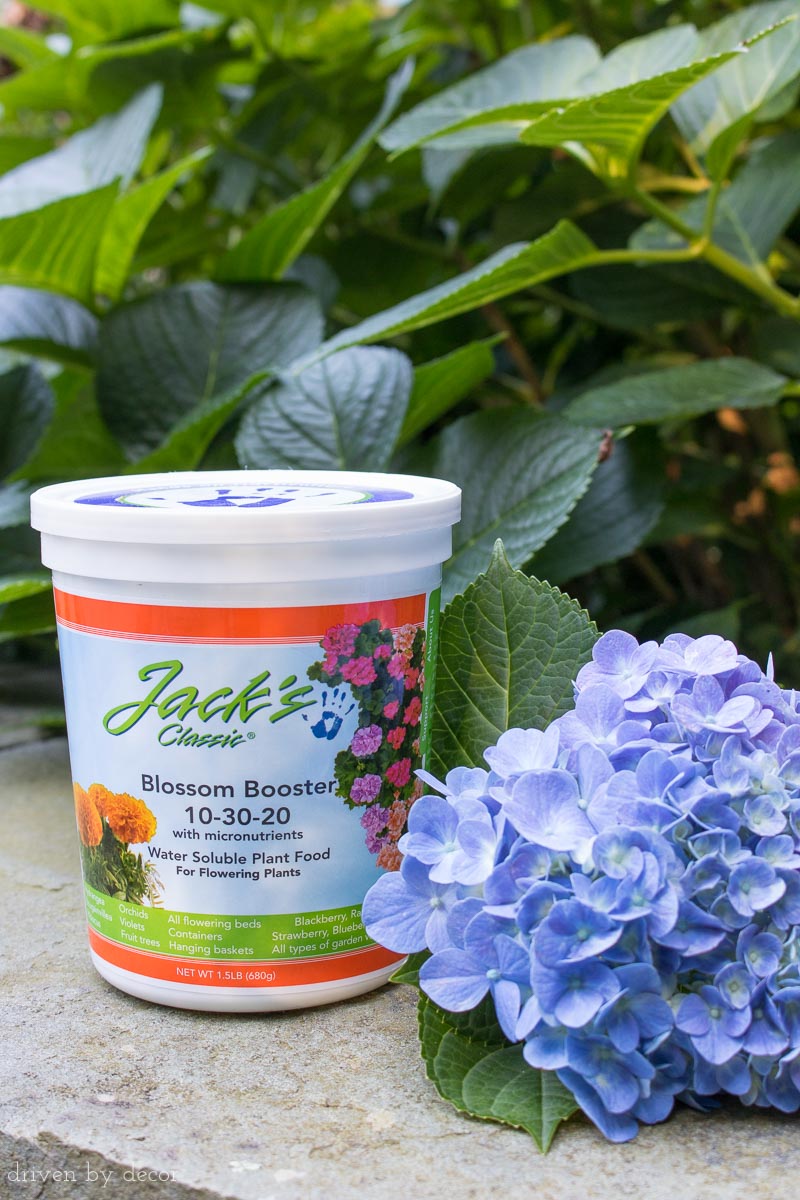
It’s important to not dump the fertilizer at the trunk of your hydrangea – instead spread it over the “drip line” of the hydrangea (the area under the branches that encompasses the entire width of the bush). Be sure to water your fertilizer in or apply it right before rain is predicted.
Changing the Color of Hydrangeas
The color of a hydrangea’s blooms depends upon the pH of the soil they’re growing in (unless they’re white, in which case they’ll always be white!). When the pH level in the soil is higher, you’ll get pink blooms and when pH levels are lower, you’ll get blue blooms. The pH can change from year to year depending upon things like the type of fertilizer or mulch that you’re using.
Some years every single hydrangea in our backyard were a pale blue/purple but other years we got some gorgeous pinks:
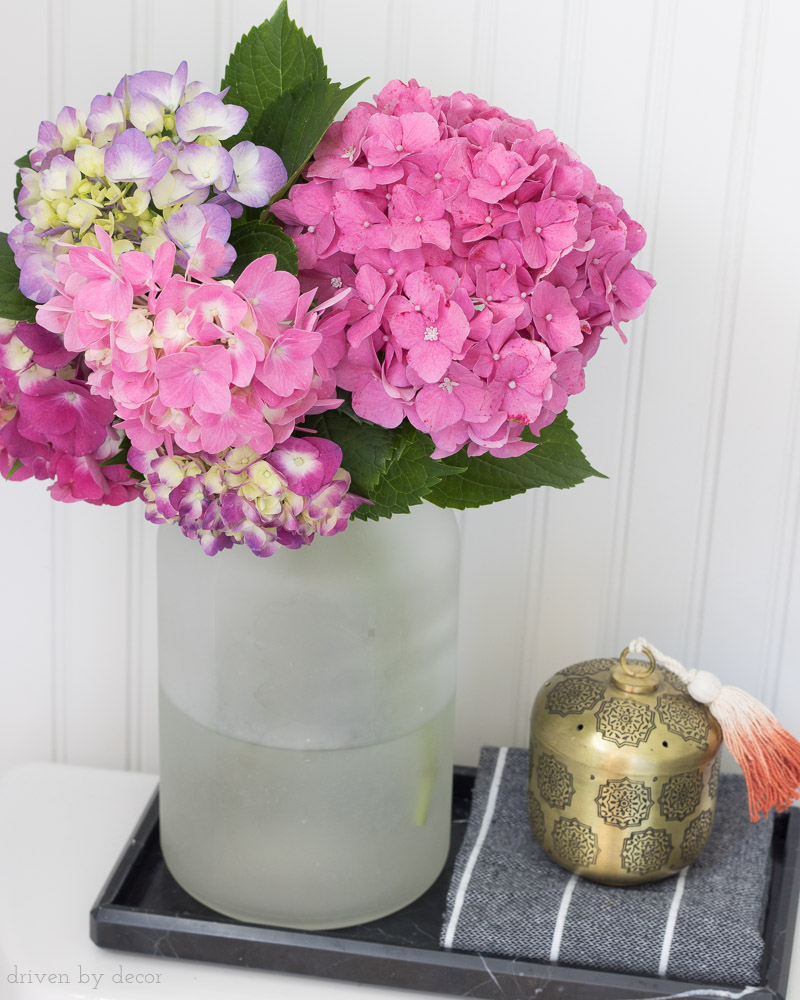
along with some seriously stunning deep purples:
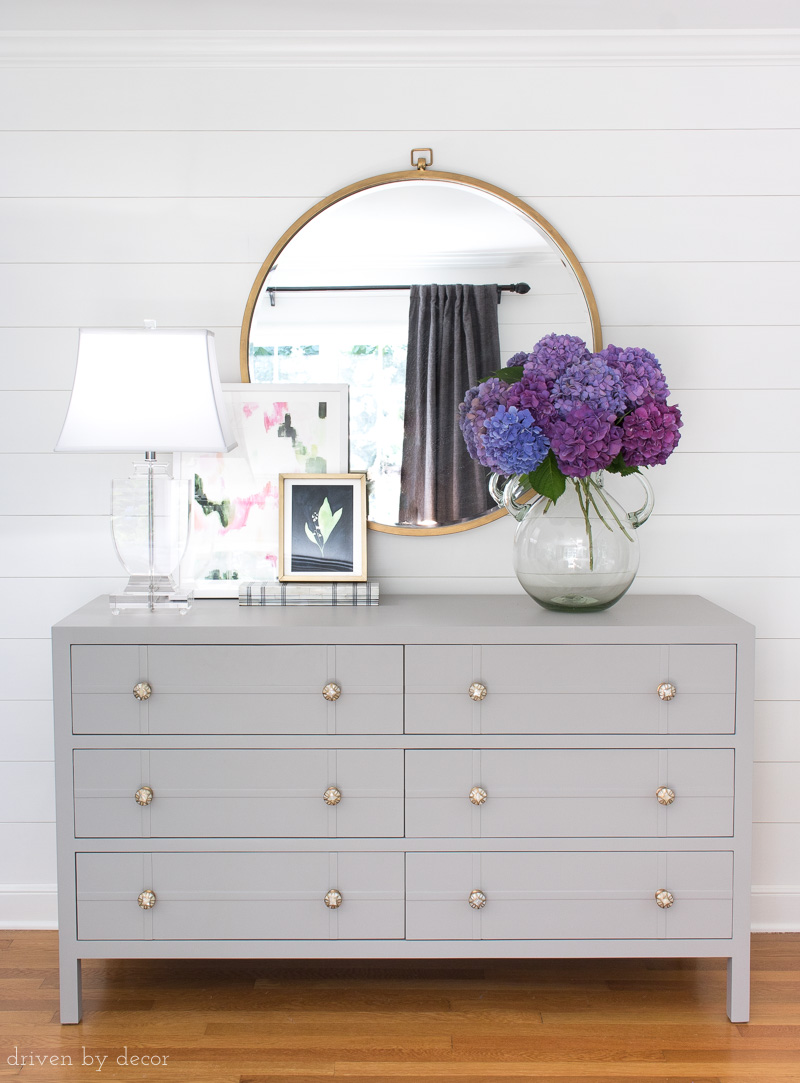
Did you know that there’s actually a way to tweak Mother Nature’s plan and get the color blooms that you prefer? If you want pink blooms you can raise the pH by sprinkling garden lime such as {this} near the base of the plant.
If you want blue or purple blooms, you can lower the pH by applying a soil acidifier such as {this}, aluminum sulfate (available {here}), or a fertilizer with micronutrients to enhance blue flowers like {this}. I’ve also heard that coffee grounds can do the trick! The key is to apply them early in the growing season and re-apply throughout the growing seasons but water them in well and don’t go overboard because too much can harm your plants.
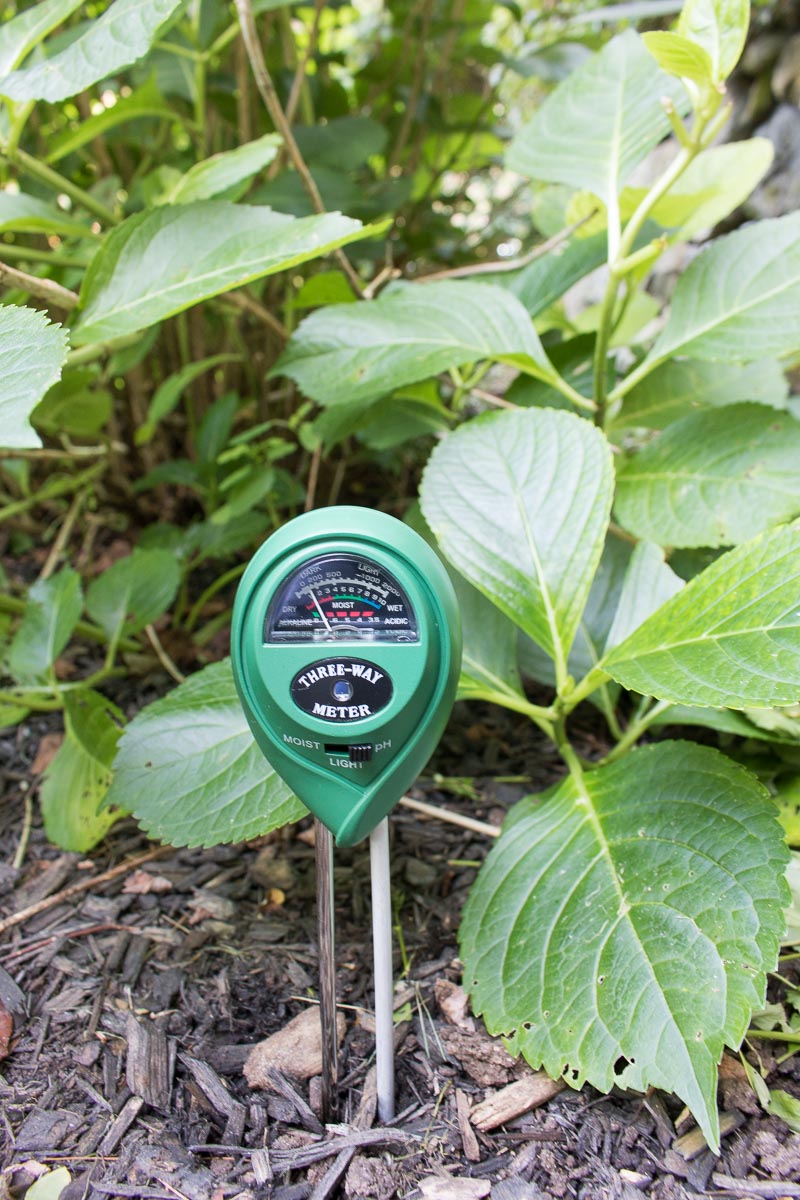
If you want to monitor your soil’s pH during the growing season you can use a probe like {this one} that gives readings on both the pH of the soil and the moisture content:
How To Keep Deer from Eating Your Hydrangeas
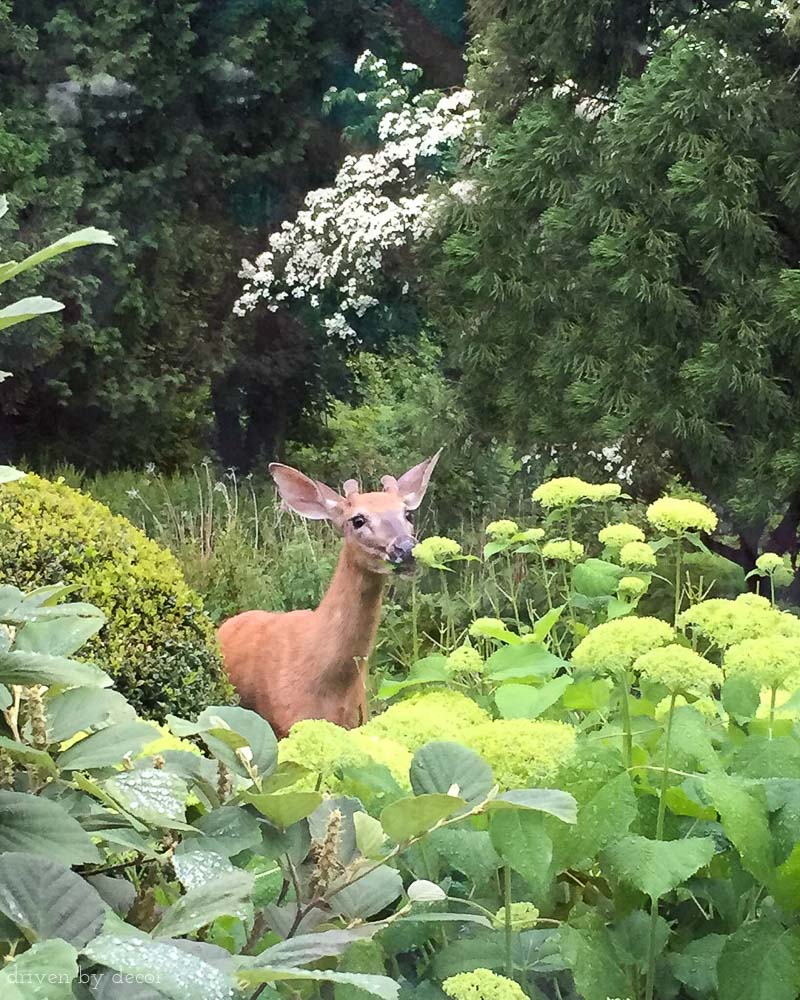
You can put all of my hydrangea care tips into use but they won’t do you any good if you have critters eating them! We had lots of deer that wandered through our yard and they LOVED to eat my hydrangeas, especially right after they’ve just started to bloom. My daughter took this pic of one of the culprits outside of our front window one day when I had neglected to spray my hydrangeas recently:
I’ve tried a few different things to keep them away but the one that works best for me is Bobbex in a ready-to-use pump sprayer (available {here}). It is truly the most disgusting smelling stuff ever but it does the job! I spray mine early on in the season before my hydrangeas start blooming and then once a month throughout the growing season. Between our front and backyard we have a ton of hydrangea bushes but it only takes me about 15-20 minutes to spray them all. You can read more about using Bobbex along with other tips for repelling deer in my post on how to keep deer from eating flowers and plants.
How To Make Cut Hydrangea Blooms Last
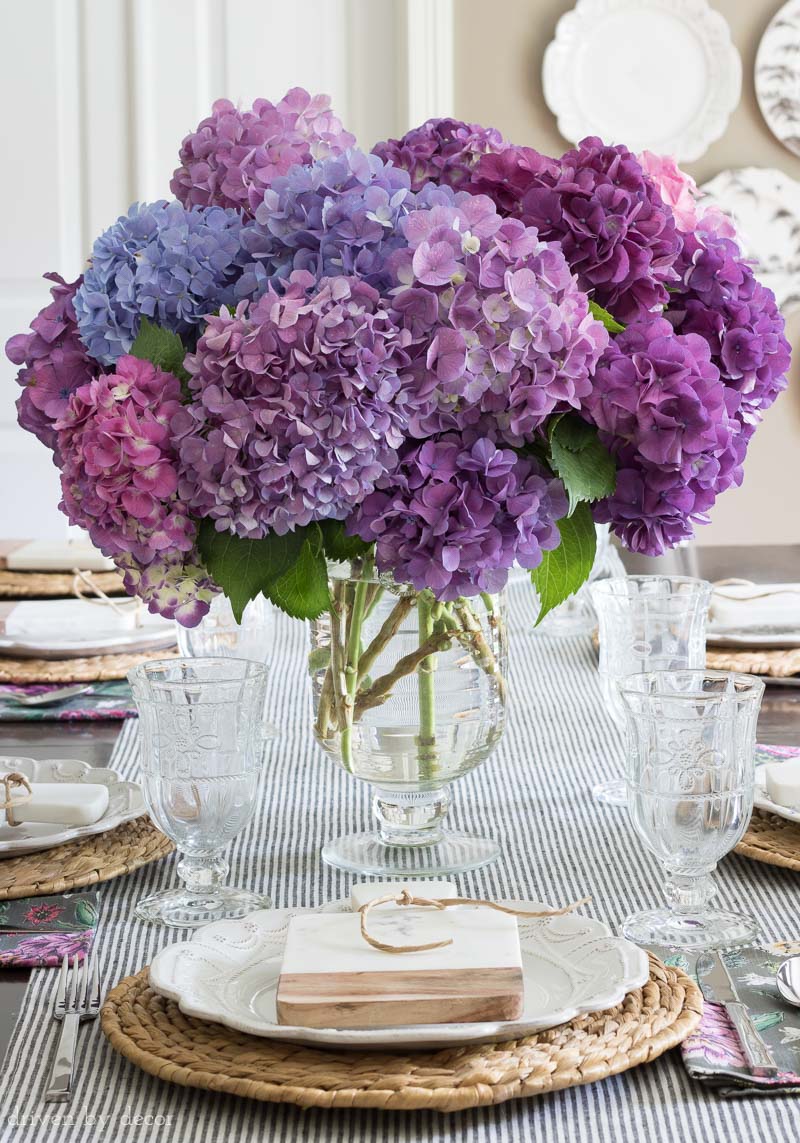
It’s so disappointing to have a beautiful bouquet of hydrangeas that starts wilting just a few days after you put it together. Here’s what I do that helps keep my cut hydrangea blooms last (sometimes for two weeks or more!):
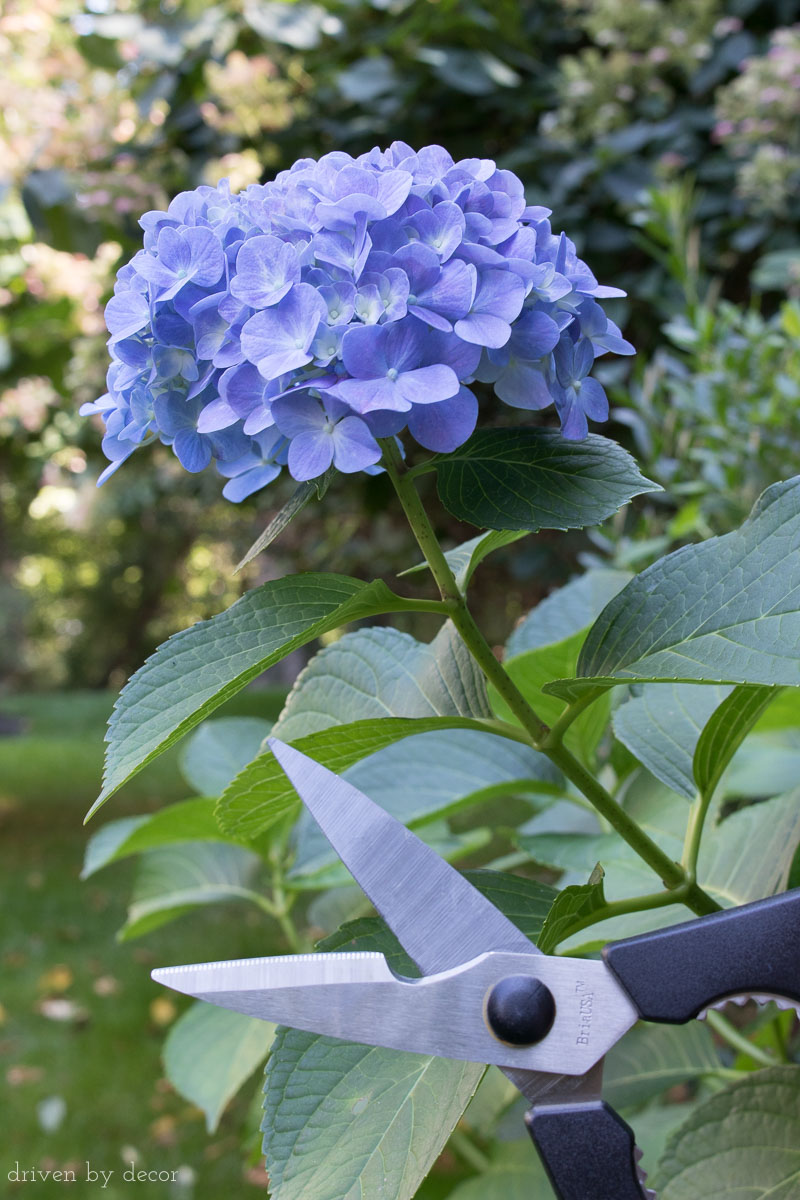
- Clip your blooms in the morning and cut the stems on the diagonal. A lot of gardeners recommend using a knife but I’ve always found that to be difficult and awkward. Instead of using typical garden pruners, I like using {these kitchen scissors} – by cutting the stems near at the base of the scissors where there’s a semicircle, it acts like a guillotine and gives a clean cut without crimping the stem. And the two blades pull apart so you can throw them in the dishwasher for easy cleaning.

- Remove any leaves that will be below the water line of your vase – this helps keep away rot and bacteria.
- Use a vase that has been washed in warm, soapy water (not just quickly rinsed out from its last use).
- Add a packet of flower preservative to the water if you have it or, if you want to go all out, dip each stem in boiling water for 30 seconds and then in Alum powder (available in the spice aisle at grocery stores) before putting them in your vase.
- Change the vase water every other day.
How To Revive Wilting Hydrangeas
While most of my hydrangeas do well using the tips I outlined above, I sometimes get an outlier or two that unexpectedly wilts just a few days after being cut. There are several different ways to revive wilted hydrangeas like dipping their tips in boiling water or submerging the whole bloom in cool water overnight but the trick that works just as well for me and is easier is to simply recut the stem (on the diagonal again) and put it in a glass or small vase of very warm water (I use the hottest water that I can get from the tap) for several hours.
This will typically perk up your bloom by the end of the day at which time he can rejoin his friends in the bouquet!
And finally, I’m wrapping up my hydrangea care tips by answering the question I get the most…
Why Didn’t My Hydrangeas Bloom this Year?
It is SUCH a bummer when hydrangea season rolls around and your bushes start to grow and get big and leafy but…. there are no blooms. Here are a few of the reasons it can happen:
- Pruning at the wrong time. If you have hydrangeas like mopheads that grow on old wood and you pruned them too late in the season the year before, you probably inadvertently removed the buds that had started to develop for the following year.
- Using too much fertilizer. Some fertilizer is a good thing but too much is not! Don’t over do it.
- Frost damage. A late frost can damage developing buds so that they never bloom. In cold climates, before winter you can try mounding up mulch or straw about a foot high around the base of the bushes to protect and insulate the developing flower buds.
- Too much shade/not enough sun. Hydrangeas need a certain amount of sunlight to bloom so if yours isn’t getting several sunny hours a day, that could be the problem – you might need to try a different spot in your yard.
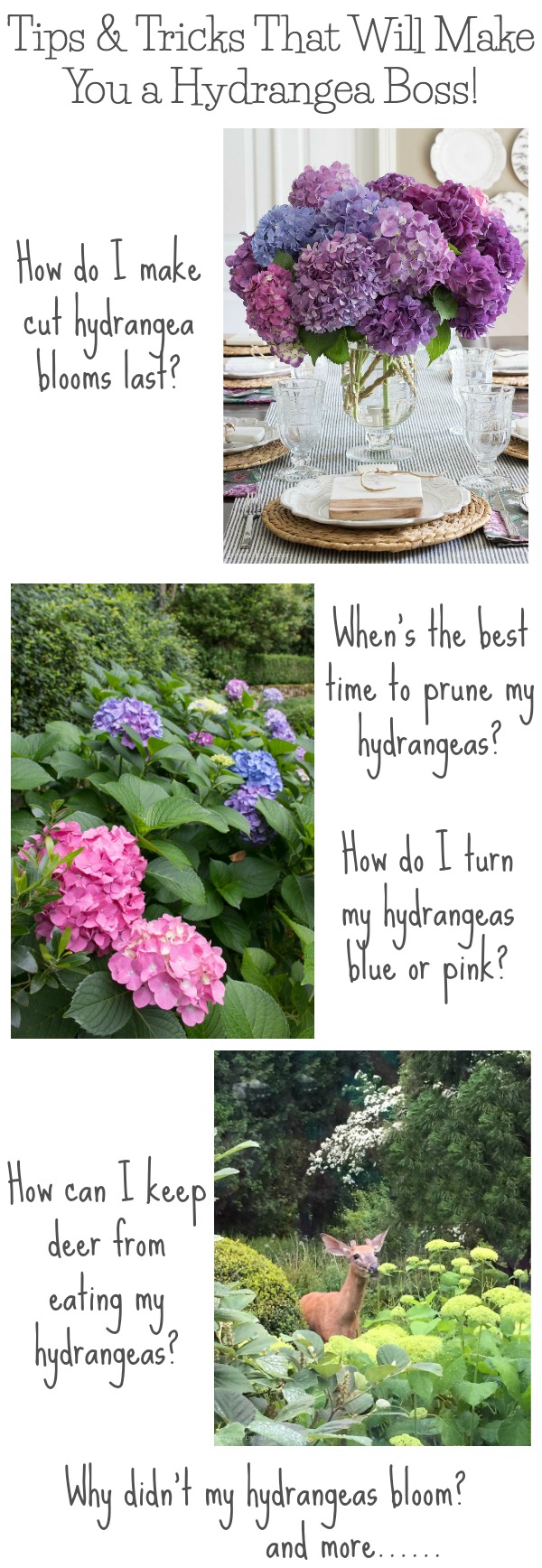
If you want to save the link to this post so it’s easy to find when spring rolls around, I created a Pinnable image at the end of this post! If you want other tips on getting your outdoor spaces spring-ready check out this post:
Simple Outdoor Decorating Ideas
XO,




Jan says
My hydrangea is in full sun and isnt doing anything! When is it safe to move it?
Rita Marable says
I have hydrangeas that habe notbloomed in 4 or 5 years. What can I do. Beautiful green bushes but no blooms. Did bloom in past.
Redeanna Tucker says
Some of my hydrangeas have leaves that look burnt. The are hard and crispy. Also I live in Oklahoma. The summers heat can be brutal. How much sun should I realistically be giving them?
Lisa says
Oh my goodness! Your hydrangeas are absolutely gorgeous! I just bought 2 plants and planted them next to our shed in an area that gets quite a bit of shade but is sunny as well. The problem is the flowers are already turning brown and some of the leaves are also curling up on the edges. I did put some fertilizer on them and was watering them every day. They seemed to like alot of water. Now it’s more every other day. They are the big leaf variety. I live in Ohio. These are my favorite flower and I would love to be able to make mine look like yours eventually!!! I need help!!! I don’t know if I should just cut them off so they get new blooms or what. I see one of them had one green looking bloom on it. I am not sure about that. I planted them about two weeks ago and they were in full bloom when I bought them. Thanks for any help you can give!!!
Katie says
Can I cut the blooms off anytime of the year and they will re bloom??
Fahmz says
I deadheaded my hydrangeas (mophead) Lasting Beauty brand. Will new blooms come out this summer and how long will they take
Kelly says
The leaves are crisp on the ends and brown…? What is going on….
Janette says
One of my bushes has dead leaves and bud around the top area. Never happened before. Seems to be on old wood stems. All new stems coming through below. I don’t know whether to cut this all away To make way for new healthy stems or even why it’s gone like it. The others are fine. Any tips appreciated Thank you
Kris Jarrett says
If it’s a variety of hydrangea where the new blooms bloom on new stems rather than the old ones, it should be fine to trim the dead parts.
Megan says
Last year was my first year with hydrangeas. Just one small bush. But I never pruned them so now I still have large brown dead hydrangeas on the plant. Should I trim them? If so where at? Thanks!
Anonymous says
I thoroughly enjoyed your article however I just have one question some people say when first cutting hydrangeas cut up the stem to let the water in and then put them into put them straight into boiling water are others say in cold water others say tepid water so which do you think is best
Kris Jarrett says
I typically put mine in cool water right after they’ve been cut but if they start wilting within a day or two, I try putting them in hot water (just the hottest I can get from my faucet) which often works to perk them back up! I believe sometimes there is some sap that can clog the hydrangea stem and keep it from taking in water so hot water helps clear that blockage so they can take in water again.
Maxine Lano says
Best and most helpful tips for growing hydrangeas I have ever seen❣️
Kris Jarrett says
Thank you!
Jennifer Toomajian says
Hello,
We recently moved into a new house last summer with beautiful mophead hydrangeas. They bloomed great last year and in particularly this year. Late last fall, I only removed the very tops of the plants. This spring I forgot to trim out the old wood stems. Today, I pruned out most of the old dead wood and a few of the old stems had new growth on them. Many growing into the ground. I did prune at the base in order to have a more manageable shape. I have not touched the other stems or growth. Will the entire plant be affected by my taking out a few of these old stems and growth? Just curious!
Thanks so much<
Jennifer
Kara says
I love this article about my favorite flower; so helpful and we’ll written.
My question: we live in northern CO and while hydrangeas typically don’t do well here in our dry climate we have had success with 3 different variations. Our landscaper instructed us to cut them all down to about 1” in the Fall then mulch them, however, one type is the mophead which, based on your article, they bloom off of old growth so when we do that we’re pruning off next season’s blooms. Not our goal!
What would be your recommendation for winter prep?
Thank you, in advance!
Best,
Kara Gould
Loveland, CO
Kris Jarrett says
Hi Kara – it really does depend on the type of hydrangea. You don’t want to cut hydrangeas that bloom off of old growth down to the ground or you won’t have blooms next year! We just trim them down by hand to where the next grouping of shoots is.
Bonnie says
I have some beautiful blooming hydrangea and I’d like to cut some for a vase. Will that be it for my bush? Will they bloom again this summer? I hate to take away from the gorgeous bush.
Kris Jarrett says
It really depends on the type of hydrangea you have – some bloom all season long even if you cut off blooms and others bloom once and are done!
Tanya says
What causes the hydrangea leaves to turn light green?
Kris Jarrett says
I’m not sure Tanya – haven’t ever dealt with that before! Sorry I can’t be of help!
Trish says
My hydrangeas early this year were blue and deep purple but are now blooming white. In some shade and some sun in Tyler, Tx. In 90° here every day about noon.
Why now white blooms.
Kris Jarrett says
In some varieties, the bloom color depends on the pH of the soil. Something as simple as adding mulch or fertilizer can change that and cause different color blooms!