

Late last year I tried laundry stripping for the first time and after seeing the nastiness it got out of our sheets & towels, I was hooked! It’s really simple to do (and honestly kind of addictive 🙈) so today I’m sharing the laundry stripping recipe and the step by step for getting the job done! (post includes affiliate links; full disclosure statement available {here})
What is Laundry Stripping?
While you might not be able to see it, over time your clothes and linens develop a build-up of residue from body oils, laundry detergent, and fabric softener. Laundry stripping is the deep cleaning process of stripping all of that residue away. The amount of nastiness that you can get out of your “clean” laundry through the laundry stripping process is both amazing and horrifying all at the same time 😂! It’s as simple as soaking your laundry for several hours and then throwing it in your washer and dryer – I’ll share the laundry stripping recipe along with the step by step of the laundry stripping process.
Laundry Stripping Recipe
The laundry strip recipe or formula is pretty simple. It’s a 1:1:2 ratio of Borax, washing soda, and powdered laundry detergent. For a standard bathtub that’s filled about ½ full with hot water, add:
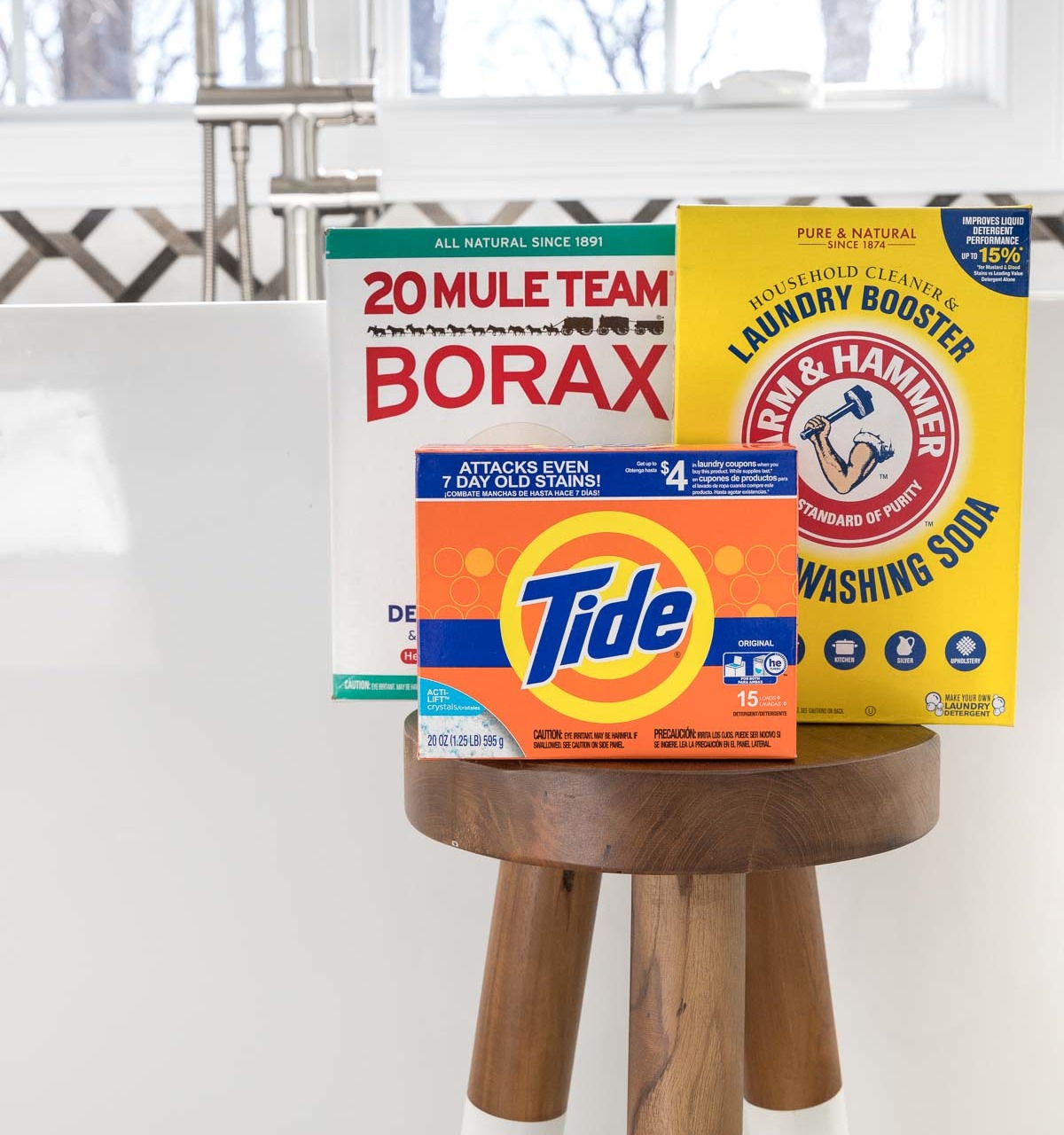
How to Strip your Laundry Step by Step
1. Gather the Items You Want to Strip
Gather up the items that you want to strip – towels, sheets, and workout clothes are some of the most common items to strip but anything that’s machine washable in hot water is fair game! If it’s something that you’ve sweated in a lot or just worn or used the heck out of, chances are there’s a good bit of detergent build-up along with the build-up of oils and other human nastiness. You do laundry stripping on clean clothes (which makes it all the more crazy how much yuck you’ll see come out of them!).
I’m going to strip a set of sheets, some older towels that my sensitive nose thinks have a slight smell to them when wet, and my daughter’s duvet cover:
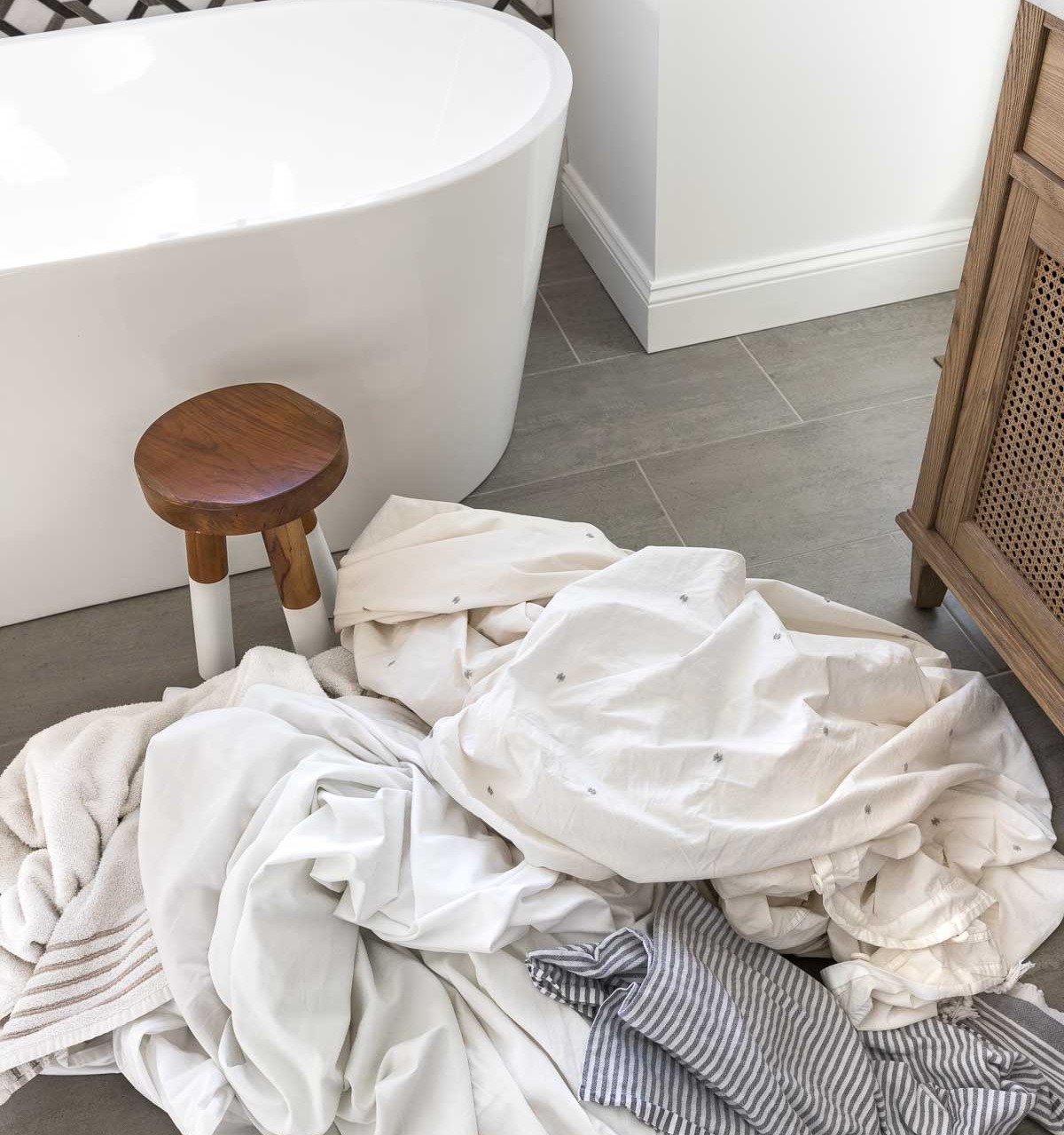
The duvet cover is a real test because my daughter is always kicking her top sheet off and using only her duvet. Over time it’s gotten discolored in spots and even bleach hasn’t been able to restore it to a whiter white.
Use common sense by sorting the laundry you’re stripping by color just like you would when using the washing machine. Since we’re using hot water, you obviously don’t want to put a red t-shirt in with your white sheets and you only want to strip non-delicate items that are ok to put in hot water.
2. Fill Your Tub
Fill your bathtub about ½ full (or only as full as you need to in order to fully submerge the items you’re stripping – I fill my large soaking tub about ⅓ full) with HOT water. If you have a large sink, you can also use that as long as you don’t have too many items (but beware that your sink will be out of commission for several hours!). You can also use a top-loading washing machine.
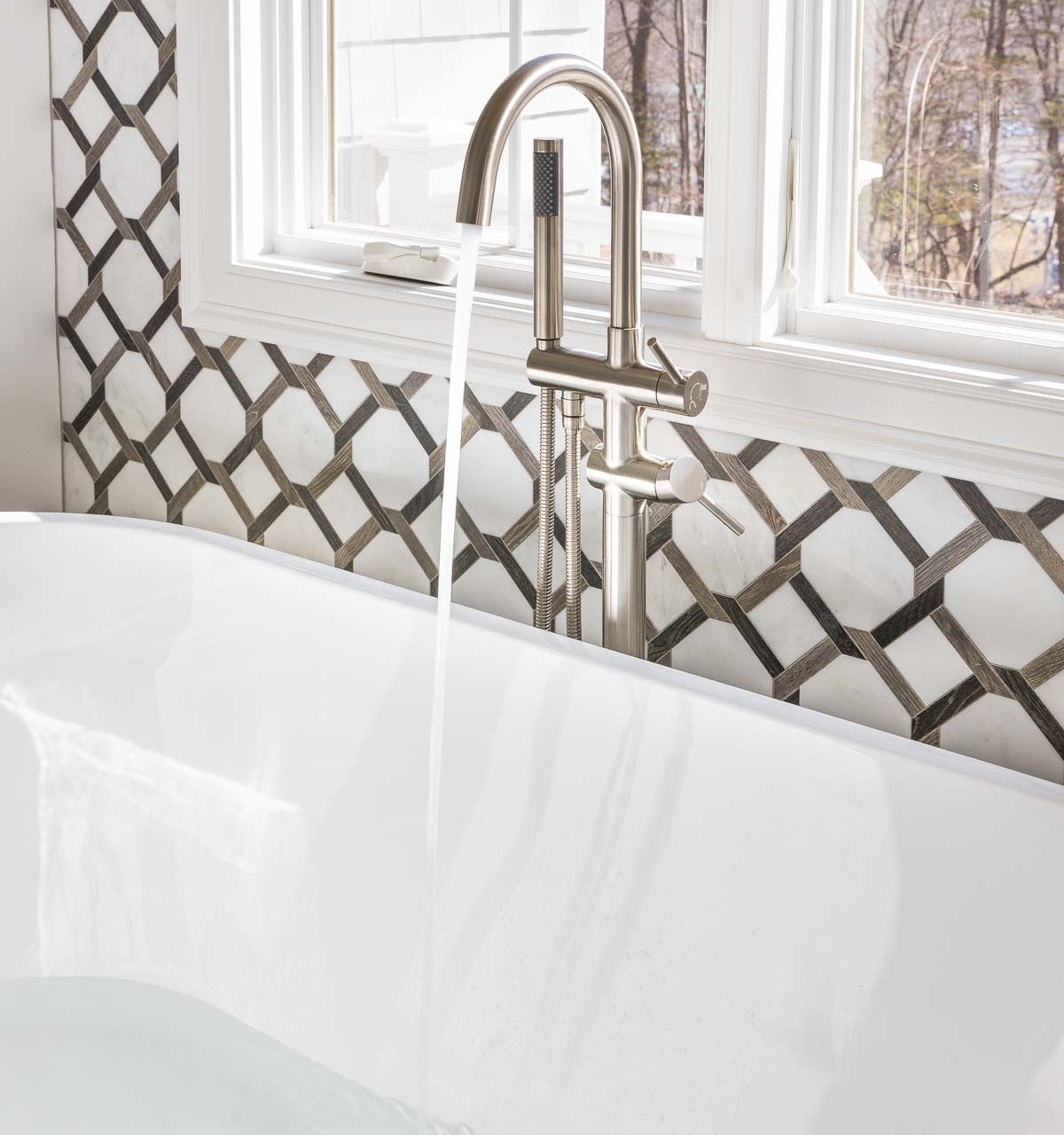
3. Add the Ingredients From the Laundry Stripping Recipe
Sprinkle the Borax, washing soda, and powdered detergent (plus the Calgon if you’re using it) into the tub using the laundry stripping recipe above. Stir the water to dissolve the powders and mix them together. Use gloves throughout the laundry stripping process for safety.
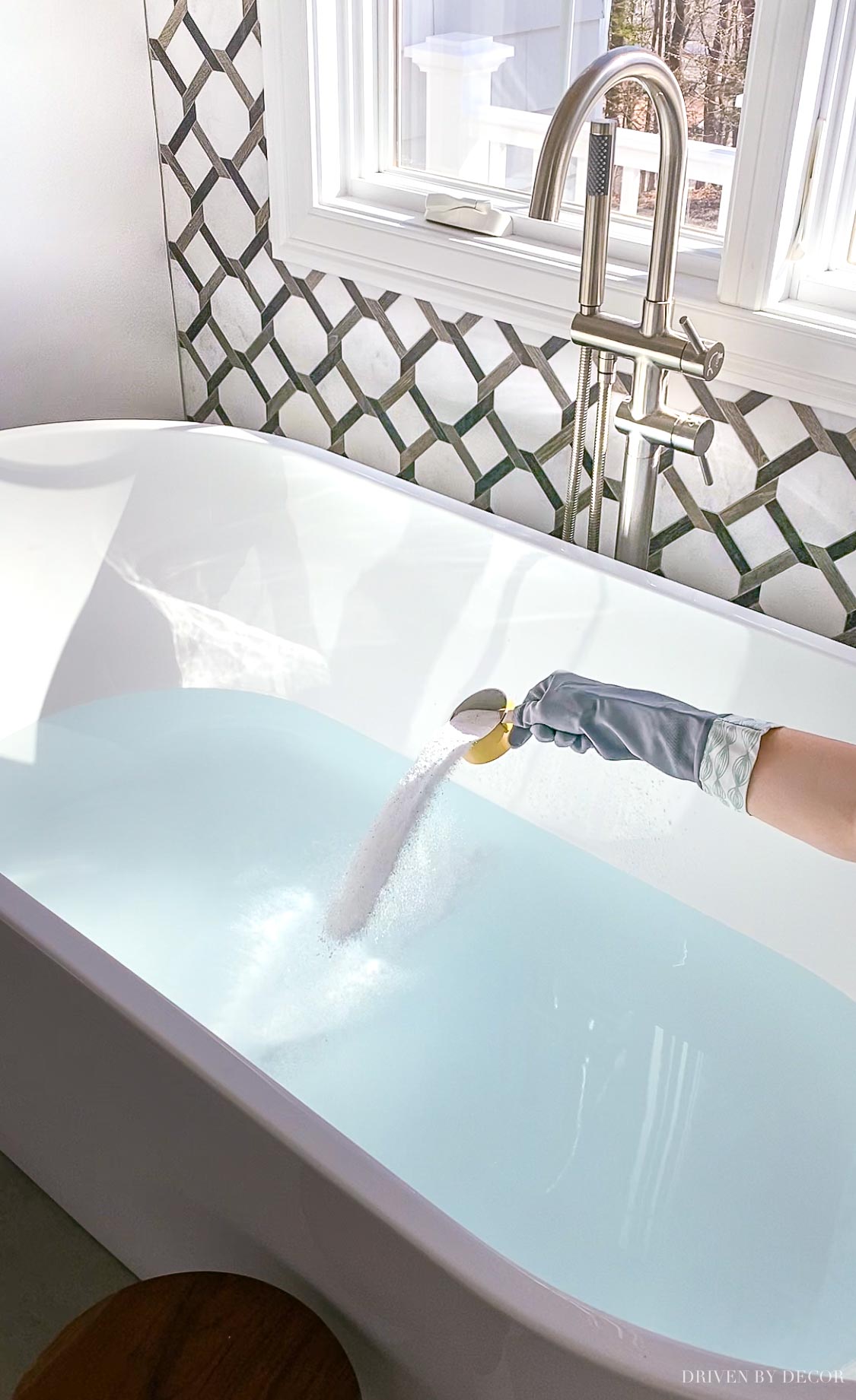
4. Submerge Your Laundry and Stir
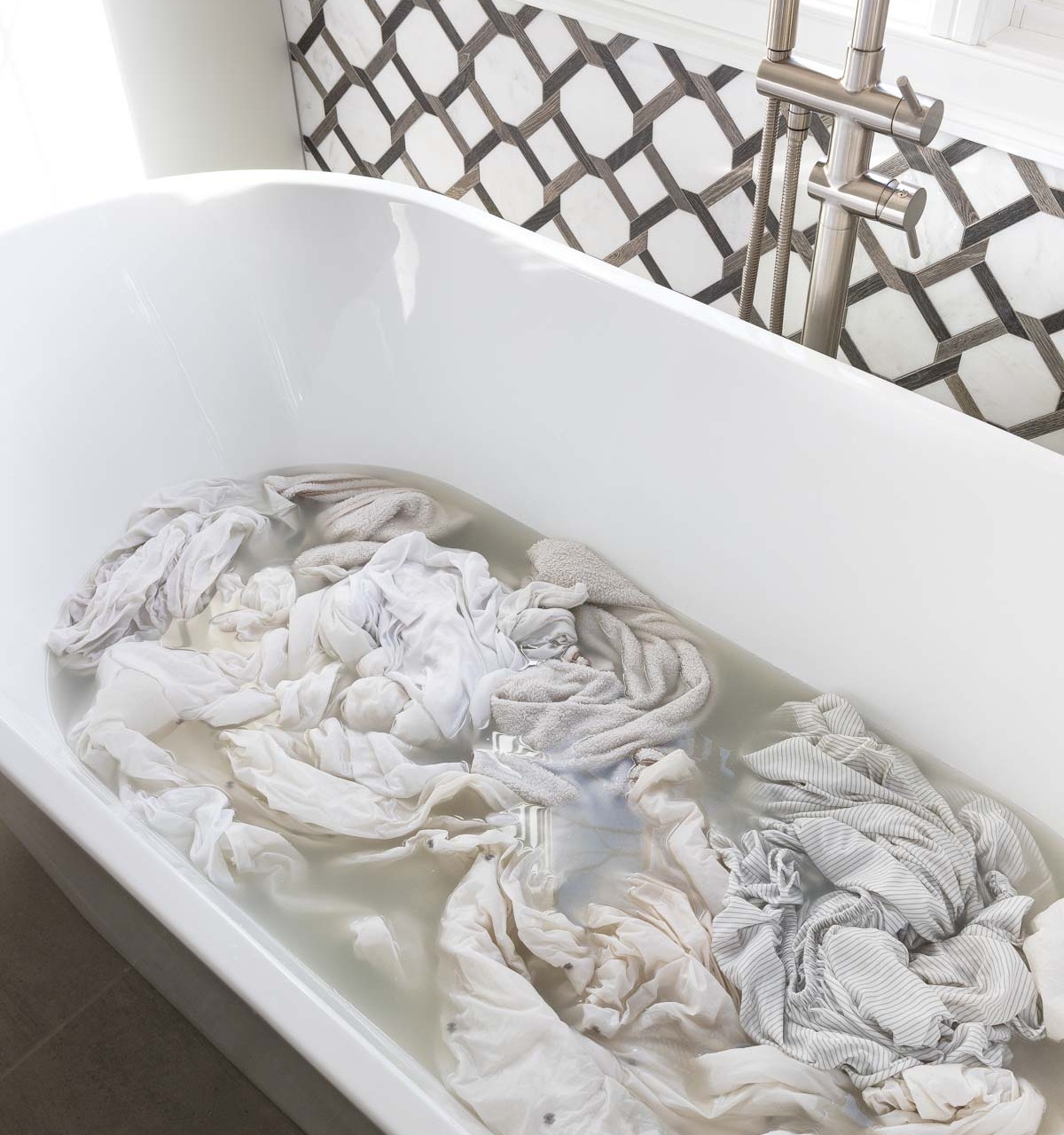
Submerge your items in the water and stir them around the tub a bit. From this point out, you’ll want to come back every hour or so to stir (and become horrified at how gross the water is getting), allowing your items to soak for 5-6 hours. This is what my previously clean blue water looked like after an hour of soaking:
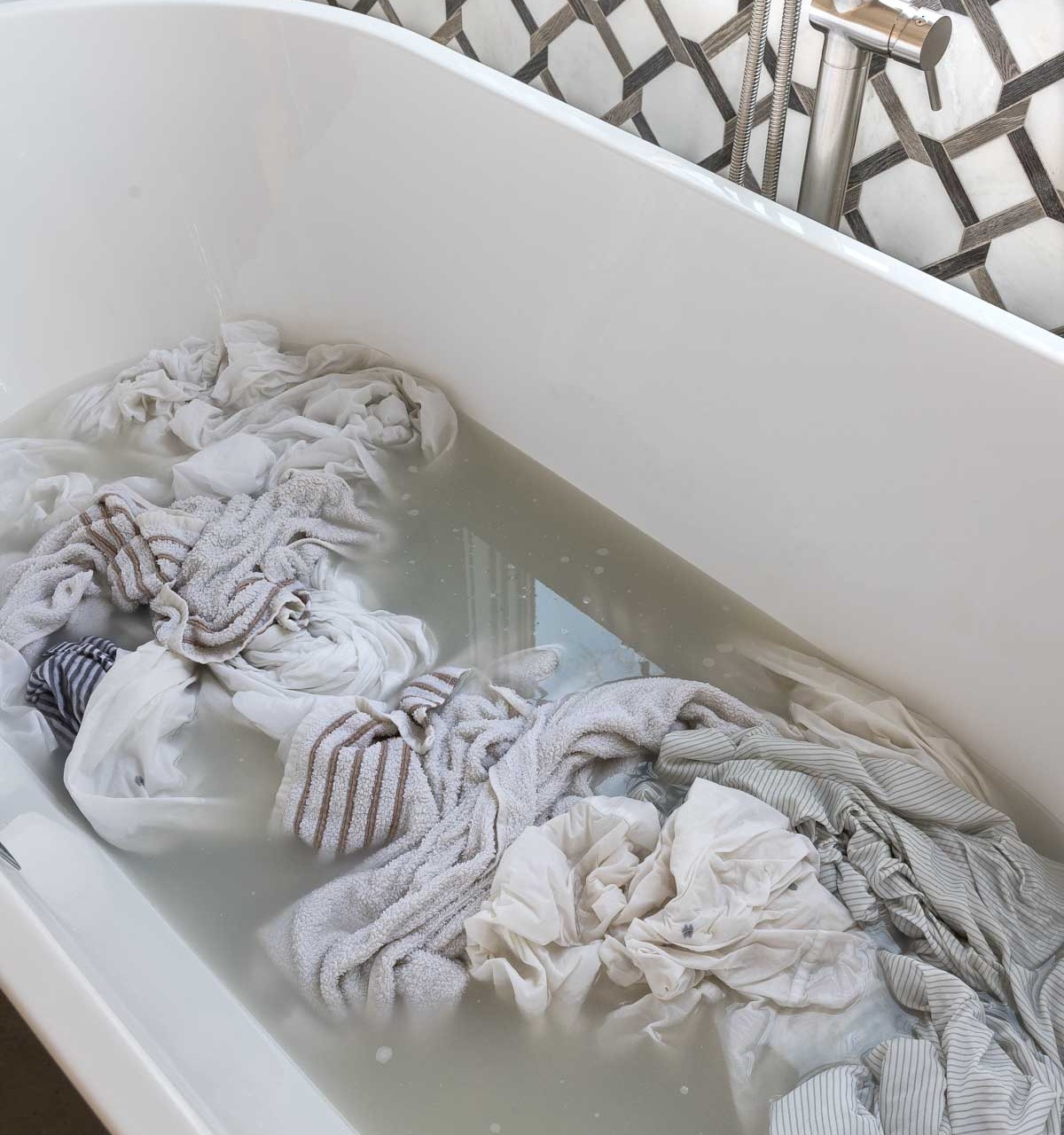
This is after three hours:
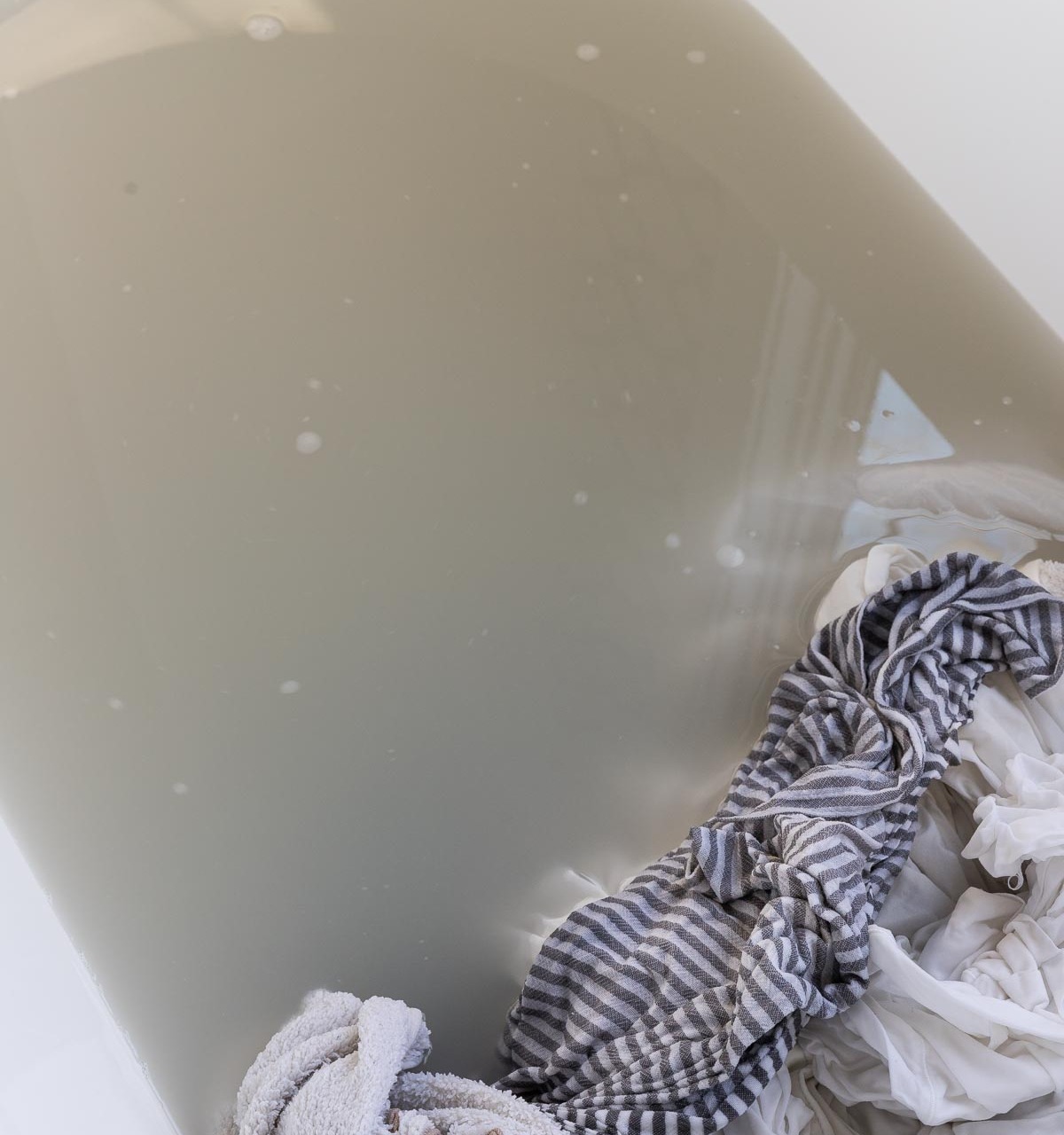
And this was at the end after 5 hours (I pulled the clothes back so you could see the nastiness in its full glory) – so gross!! And remember, this was CLEAN laundry!
Want to save this post?
5. Remove Laundry & Wash
The last step is to drain your tub, squeeze excess water out of your laundry, and then run it through a wash cycle in your washing machine (don’t add any detergent). I then do an extra rinse cycle to make sure all of the gross stuff that was in the tub water is totally rinsed out of it.
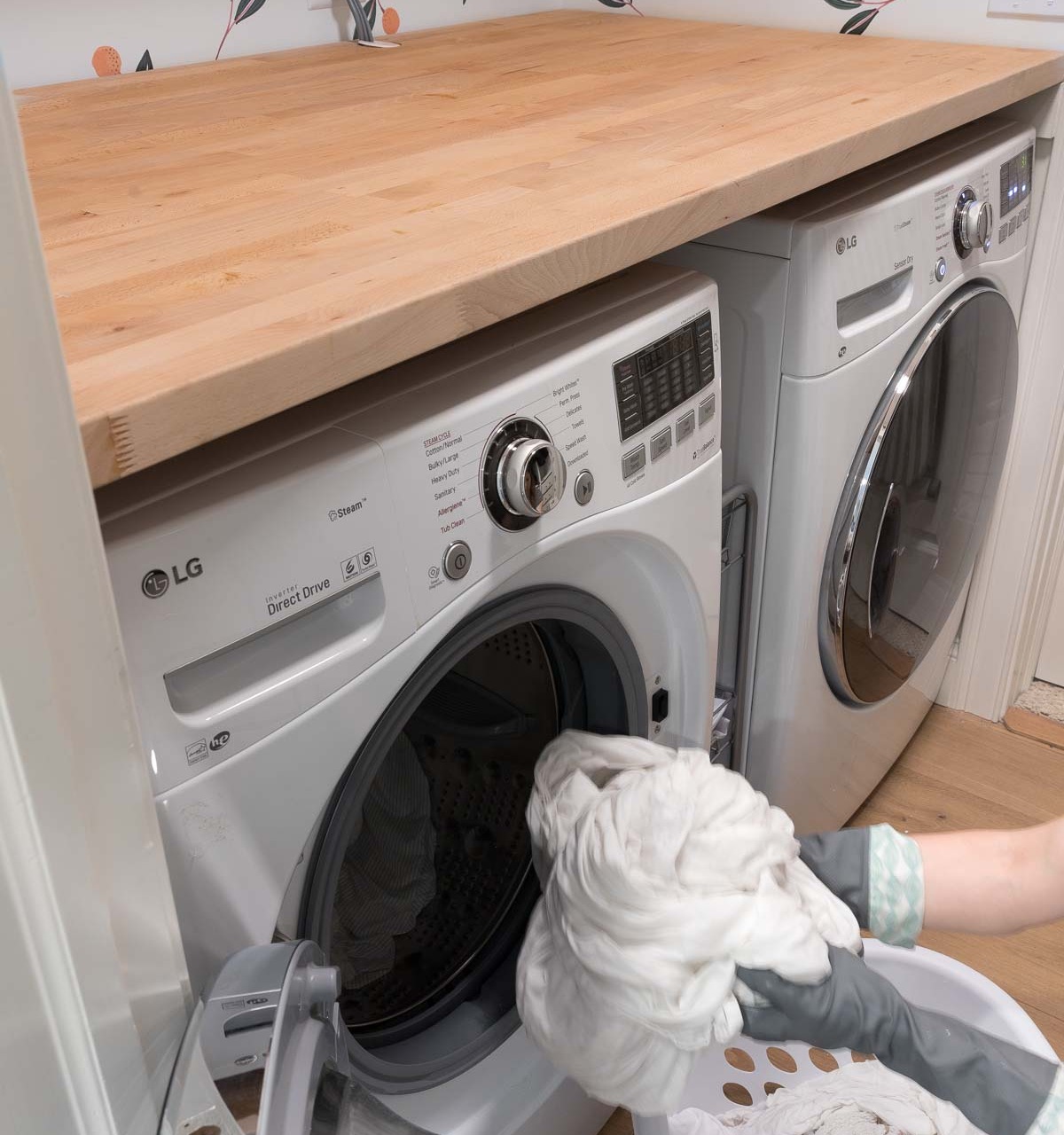
Then throw everything in the dryer as usual and marvel at your super clean and white laundry!
So how did my batch of laundry look and smell after I stripped it? Everything definitely looked whiter – I could tell a noticeable difference especially with the set of sheets I washed. When my daughter comes home from college to visit, she’ll have a cleaner than clean bed to hop into:
 Bedroom Sources: Pendant light | Bench | Duvet cover | Bed skirt | Blue fringe end pillows | White tassel pillows | Lumbar stripe pillow | Lamp | Grasscloth wallpaper (Powder Blue) | Headboard, nightstand, & art prints are no longer available
And my towels that had a funk to them passed my sensitive nose sniff test when wet. As far as my daughter’s duvet, it didn’t restore all of the discolored areas to the original super white white but it definitely whitened them up quite a bit which was a job even bleach hadn’t been able to do so I was happy with the results! If you guys try laundry stripping, let me know how it works out for you!
For any of you that are new around here, if you’re looking for more details or sources for anything in our bathroom, you can find those {here} in my master bathroom reveal post:
and you can get the details on our laundry room {here}:
And be sure to check out some of my other favorite cleaning posts:
How to Clean Your Washing Machine {here}
The Best Way to Clean Stainless Steel Appliances {here}
Shark vs. Dyson Cordless Vacuum Face-Off {here}
XO,



Meredith Dwyer says
Hi Kris,
I have some navy and white chevron towels, do you think they will bleed? I normally wash my towels in hot water but in this case, I would be soaking.
Thank you! I love your blog.
Meredith
Laura says
Did this regularly with Amaze, now use this recipe, get great results, helps that I have never used fabric softener.
RPM says
I read this and was so ready to try it! When I got to the recipe I realized it was my laundry soap recipe I already use (substitute 1/4 cup of dawn for the powdered detergent). And I already just use vinegar for my fabric softener so I guess I’m doing this every time I do laundry anyway. It makes me kinda happy, This recipe with two cups of hot water will last me a couple weeks.
Debe says
Trying this on my white sheets today.
I quit using fabric softener years ago. Use the wool dryer balls and my clothes/etc are just lovely. Fabric softener is a waste of money and does build up. Love my dryer balls!
Farmersdaughter says
Me, too! I can’t wait to get into my new home so I can use them again!
Carliss Williams says
That sounds like a great idea i’ll let you know how it turns out
Rachel says
I just did this exactly as you showed!! Used the exact ingredients. The water became dingy looking after adding the powders. My dingy white sheets didn’t change much after soaking for over 5 hours. I really was hoping this would be an amazing thing, but it just did not work for me. I hope everyone else has better luck!
Dana Keig says
I had no idea! You learn something new every day… Thanks for this. How often do you strip things like sheets and towels that get used regularly?? Thanks again.
Kris Jarrett says
Honestly I’ve only been doing it since the end of last year so haven’t stripped anything twice yet to see how long it takes for more build-up. Fabric softeners are a big contributor to build-up so if you quit using those, your laundry should stay truly clean longer.
Kimberley says
After reading your post and seeing others like it, I gave laundry stripping a try in an effort to brighten my white flannel sheets before putting them away for the season. In the end, I didn’t find much difference in them after trying this process. I think soaking in OxiClean works better. I also did not find that the tub water got as dirty as what you showed in your post. I never use fabric softener, but instead rely on wool dryer balls to keep my clothes soft so no product build up there for me. I also only use Molly’s Suds (a natural laundry detergent) to wash our clothes with so I think that helps too. I typically add about 1/2 C of baking soda to the tub of my washing machine with each load of laundry. I also add vinegar to the fabric softener compartment of my washer on occasion for extra brightening. So, for me the process showed that my fabrics did not have a lot of product build up which was a positive.
Kris Jarrett says
It makes total sense that you wouldn’t see much in your water if you’re not using fabric softener and are using vinegar with each load since you aren’t getting that build-up!
irene redfern says
I have had the same jug of fabric softener for at least 5 years. I just soak an old facecloth and throw it in the dryer… and it lasts for weeks then I just add a bit more when I think it needs it. so it does not add too much to the clothes. also my mother always used vinegar in a rinse to get out extra soap. and my mom also used to soak items, but i do not know what she used.
Terrie in Atlanta, GA says
I’m reading this exactly one year after your post, but just wanted to say THANK YOU! The photos were very helpful (and persuasive). Beautiful white bed sheets are one of my favorite things in this world. And, I do agree with people who think our front-load, low water washing machines contribute to the problem. I use -1 T. detergent + vinegar in the softener compartment + extra rinse cycle.
S. Minehart says
Do you have any advise for washing a down duvet?
Kris Jarrett says
Yes – i have details on that in this post: https://www.drivenbydecor.com/best-duvet-insert/
Pam Komons says
Hello there, I just wanted to tell you how much I love your blog! I’ve been so inspired by your design tips and photos of your lovely homes!
maggie says
This is so fascinatingly, disgustingly awesome! I’m currently stripping my sheets. I had wanted to try to whiten / brighten my linens. Thanks for the timely tip. So gross … so cool
Mary says
Wow – that’s incredible ! We have a front load washer. Many times I had noticed a lot of soap bubbles would still be left after the rinse cycle and I would need to do an extra rinse or two. Also, our towels would always smell a little funky. A while back we had a problem with the detergent tray in our machine. When the repair man came out to fix the machine, he told us we were using too much detergent. He said we should only use about a tablespoon of detergent for a regular sized load since the detergent is so concentrated. We had been using the amount recommended on the Tide HE detergent we use – filling the cup up to line 1. I measured that amount and it’s 5 tablespoons 😳 ! Since we started using only 1 tablespoon of detergent, the laundry smells much fresher after being cleaned and no soap bubbles remain after the rinse cycle
Lyn says
So true about using too much detergent Mary. Our washing machine repair guy advised us to do a cleaning cycle occasionally with Epsom Salts and hot water (no clothes).
Kris Jarrett says
That’s so true – you need WAY less detergent than the detergent manufacturers recommend you use! I didn’t know you could go as low as 1 tablespoon though – good to know!
KL says
I just ordered all the “ingredients”! I have a brand new front load washer that does not get stuff clean enough. Excited to try!
Karen B. says
Kris,
Is there a way to prevent this from happening in the first place. This is gross and I suspect the same thing of my towels and sheets. I will definitely try this.
Thank you for finding such great household tips for us.
xo,
Karen
Kris Jarrett says
The biggest culprit is fabric softeners – if you can get away from using them you’ll have less build up. Several have suggested using vinegar in the fabric softener dispenser and I’m going to try that 🙂
Rhonni Russell says
Vinegar does make a great fabric softener, but can damage plastic parts in your laundry machines.
Cat says
I’ve been using vinegar in my machines for 30plus years and none of my machines have ever had any plastic parts get damaged or fail
Becky says
How do you do it with workout clothes. They say to wash in cold water. Will hot water ruin them?
Lyn says
Hi Becky,
Synthetics should be washed in cold water. The reason is that all fabrics shed fibres when washed, but synthetics are the worst for the environment because fabrics like lycra are actually made using petrochemicals (plastics) and the fibres that shed end up in our waterways (from washing machine waste). There are many studies on this from the academics globally. It is estimated that by 2050 there will be more plastic in our oceans than fish (if we keep doing what we are doing), and waste water from washing machines is a major component of microfibres in the oceans. Synthetics shed less in cold water and a delicate short cycle. Does your washing machine have a microfibre filter?
Glad to see many have mentioned drying in the fresh air (weather permitting). Also better for the planet.
Hope this helps,
Lyn
Kris Jarrett says
Becky, someone else commented that they tried stripping workout clothes in room temp water and it worked for them!
debra @ 5th and state says
YIKES!
I had never even heard of this method, nor that oils/detergent….. remains and builds up!
Fascinating Kris, thank you for this knowledge
xo
Debra