

I’m sharing how to DIY shiplap walls to get the look of true shiplap on the cheap! From prep to install to the finishing touches, I’ll walk you through it step by step!
(affiliate links included in post – full disclosure statement available {here})
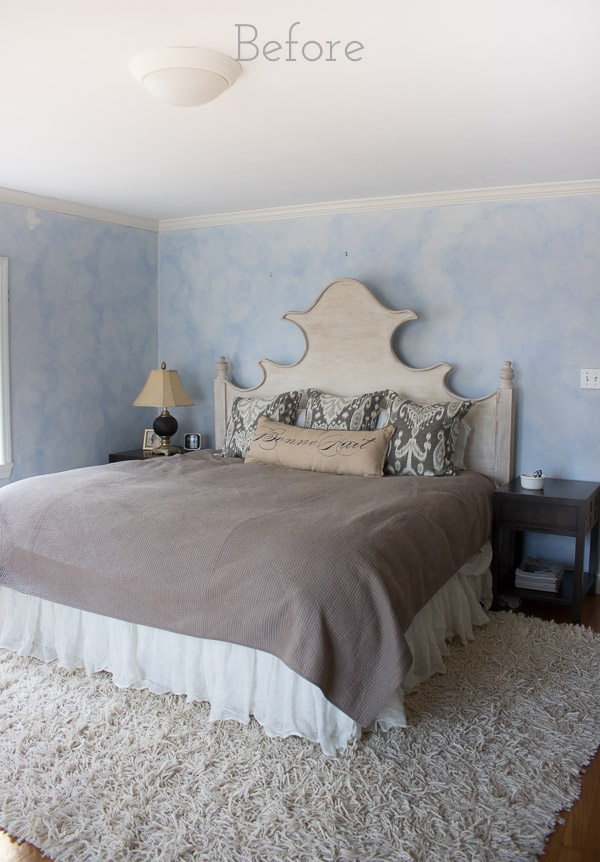
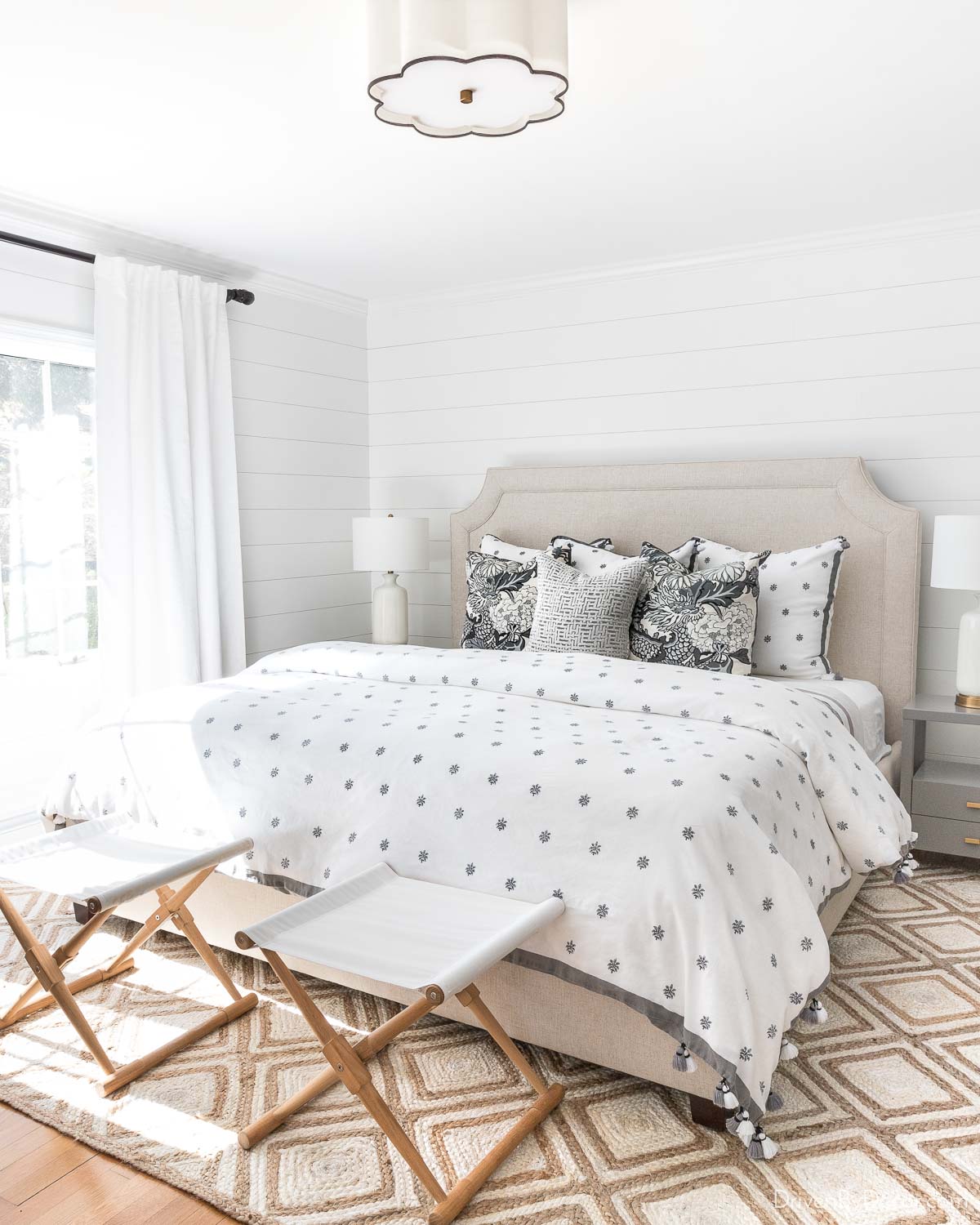
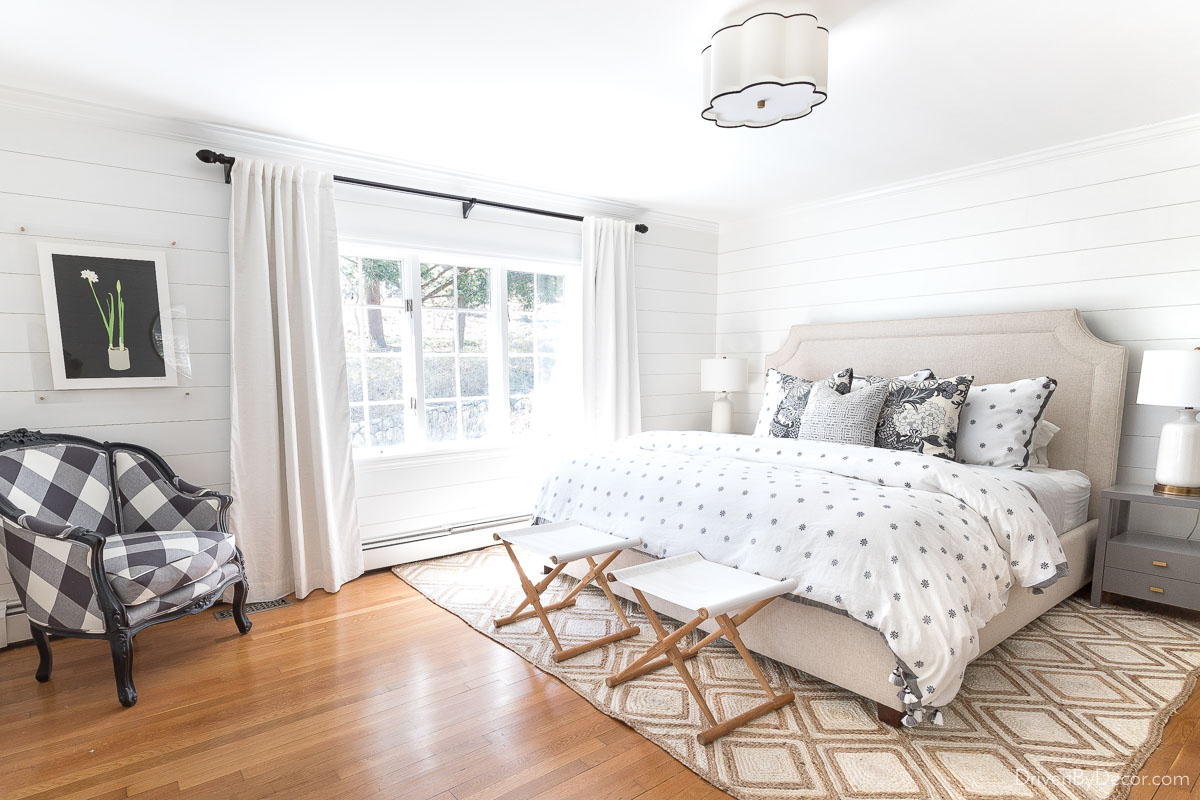
When we first moved into our home, our bedroom had light blue textured faux finished plaster walls with lots of ugly cracks. Instead of skim coating & sanding the walls and fixing all the cracks in the plaster, I decided to cover the walls with shiplap instead. I figured out a way to DIY shiplap walls that was a lot less expensive than installing traditional shiplap and I’m so happy with how it turned out:
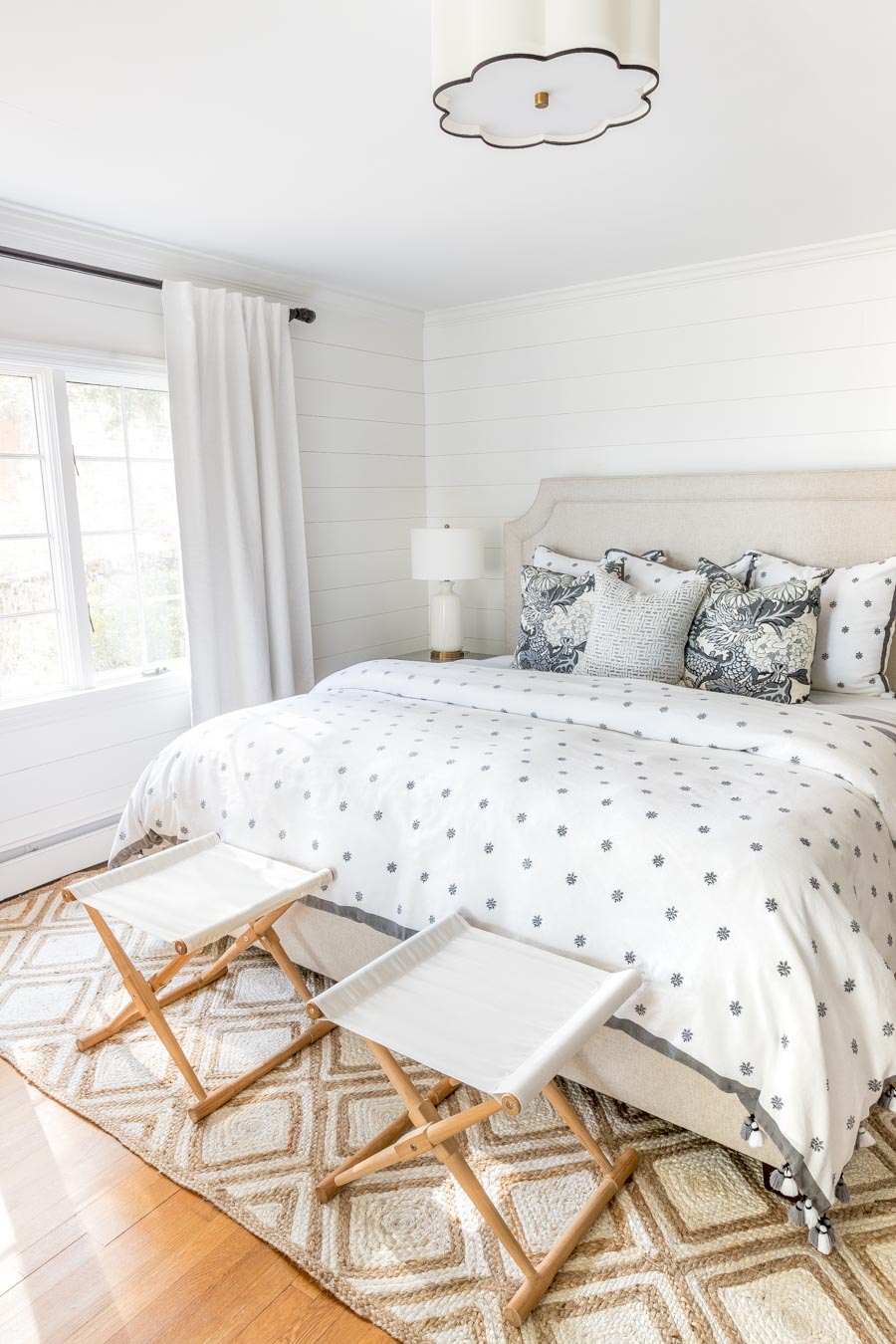
Sources: Upholstered Bed (similar) | Gray nightstands | Camp stools (similar) | White table lamps (similar) | Semi flushmount light (available {here} and {here}) | Gray & white patterned linen duvet – no longer available | Gray & white dragon/floral pillows | Quilt in king (color is Flagstone) | Drapes (mine are single-width blackout lined) | Diamond jute rug
Since I’ve gotten so many emails with questions about how I knocked this project out, I thought I’d write up a quick post to share some what-to-do and what-not-to-do tips that I learned along the way!
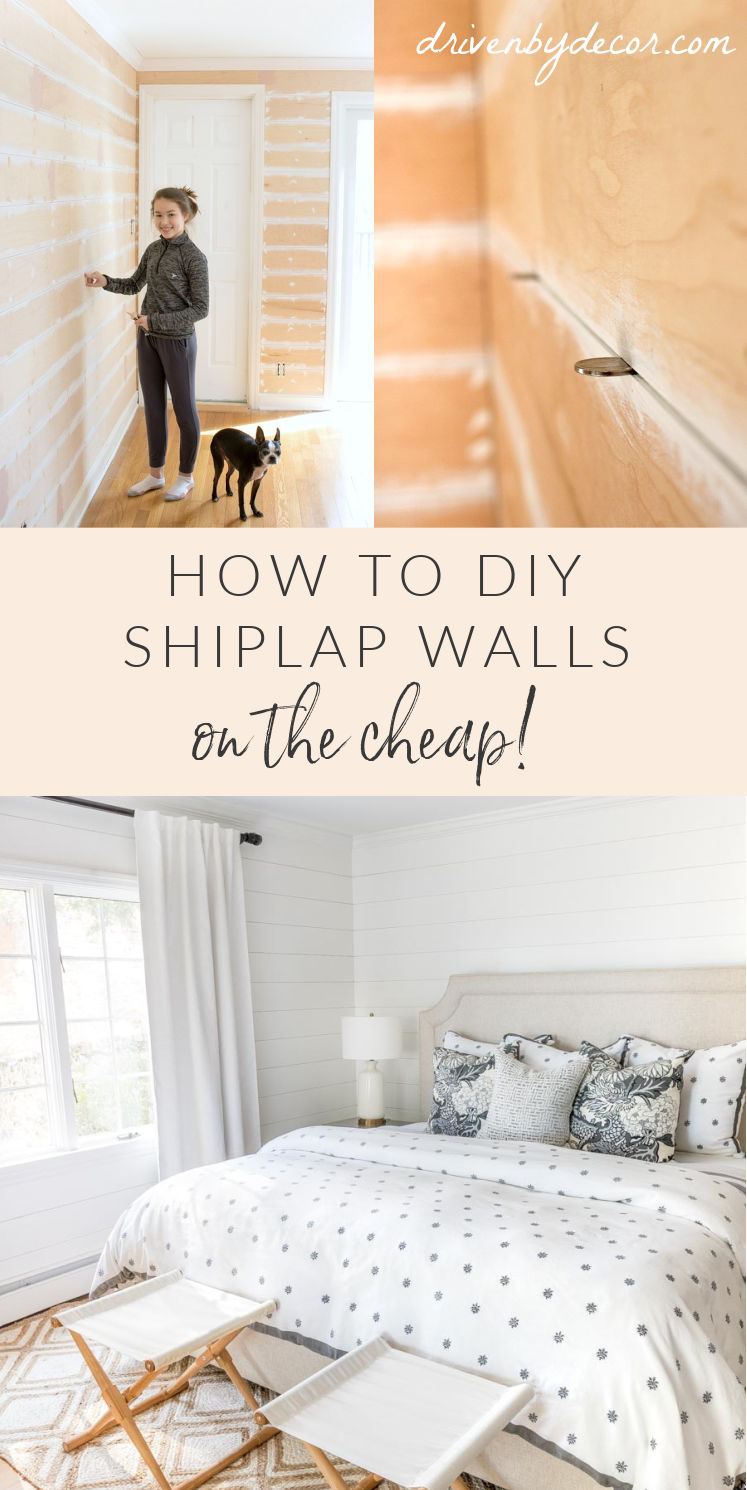
For Cheap Shiplap, Faux is the Way to Go!

There’s definitely a significant cost savings to creating the look of shiplap with plywood strips instead of using true shiplap boards so that’s one reason that faux is the way to go. But also, since true shiplap boards are about ¾″ deep, it means that you have to remove ALL of your molding (baseboards, crown molding, door trim) to install “real” shiplap and then reinstall the molding back on top of it. Umm… no thank you! We went with plywood strips that are only ¼″ deep so we were able to leave all of the molding in the room in place and simply butt the wood strips up against it. So much easier!
Shiplap Prep: Paint Your Walls & Do Your Math!
Prep work for a shiplap wall project is key! First off, you want to paint the walls in the room the same color that you’re going to paint your shiplap. Why? Because there’s a small gap between the boards where you can see the wall and you definitely don’t want a different color showing through. Seeing this lovely light blue wall color (which is what they looked like before doing this project) between the white boards wouldn’t have been such a great look!
I also painted the top and bottom edges of each shiplap board before it went up on the wall because I knew it would be a little nightmarish to try and paint the edges by sticking a paintbrush through the small space between the boards once they were hung. Truth be told it took me a LONG time to pre-paint them so I’m not sure if this part of my prepwork was a time-saver or not in the end. I used Farrow & Ball White for my shiplap paint – you can read more on it and other great whites in my post on the best white paint colors.
The other prepwork that’s a definite must is a little bit of math – you want all of your boards to be the same height rather than getting to the end and realizing that you’re going to have an awkward thin strip at the bottom. So measure the space between the crown molding and baseboard and figure out a good height to cut the boards so that they fill the space exactly. Just don’t forget to take the spacing in between the boards into account when making your calculations! I ended up going with a height of 6 ¼″ for mine.
Beware of Home Improvement Centers Saws
The cheapest way to get thin wood shiplap strips at an exact height is to cut them out of ¼″ plywood or MDF sheets (I went with maple plywood sheets because they seemed to be the smoothest of the ¼″ plywood options at Lowes). Lowes and Home Depot will cut your plywood sheets into strips for you for a small fee and while I know some people have had this done successfully, I would definitely proceed with caution – their saws are made for doing rough cuts and often leave jagged and/or uneven edges. If you’re going to try having them do it for you, I would try just one sheet first to check that you’re getting a nice clean and even cut. If not, hire this job out to a contractor if you don’t have your own table saw.
Another option that’s become available since doing my shiplap walls is pre-cut mdf boards like {these}. I used them for my bathroom shiplap and they worked great!
There Is Such a Thing as Too Many Nail Holes (when you’re the one filling them…)
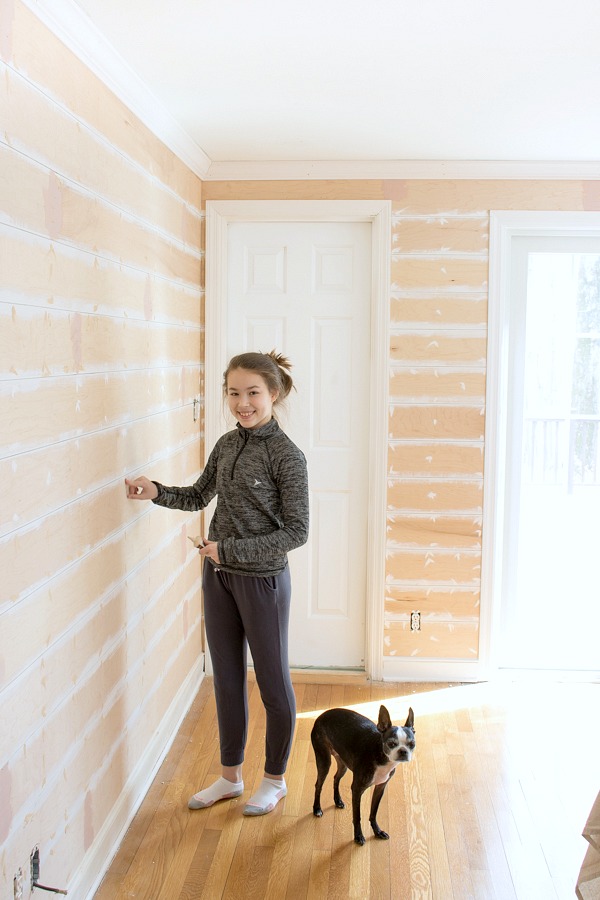
For installation, we nailed each board to the walls using a nail gun (being sure to get some nails into studs) in addition to applying Liquid Nails on the back of each board. Here’s what it was looking like at this point:
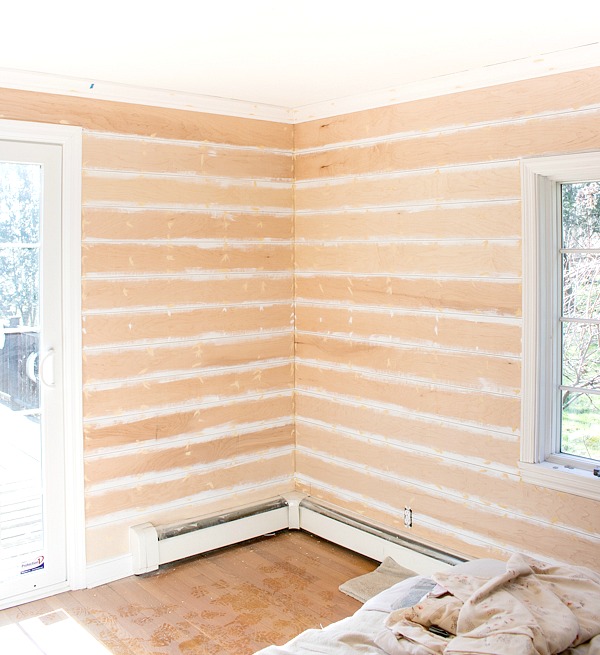
Those suckers are definitely going nowhere which is great but here’s the thing… I was the lucky one that got to fill and sand each and every one of those nail holes before I painted and oh my gosh there were soooo many nail holes and it was sooo time consuming. I’m pretty sure we could have cut the number of nails used in half and those boards still would have been super secure. Thank goodness I had a cute assistant to help me knock out the nail filling:
Nickels Make Great Spacers
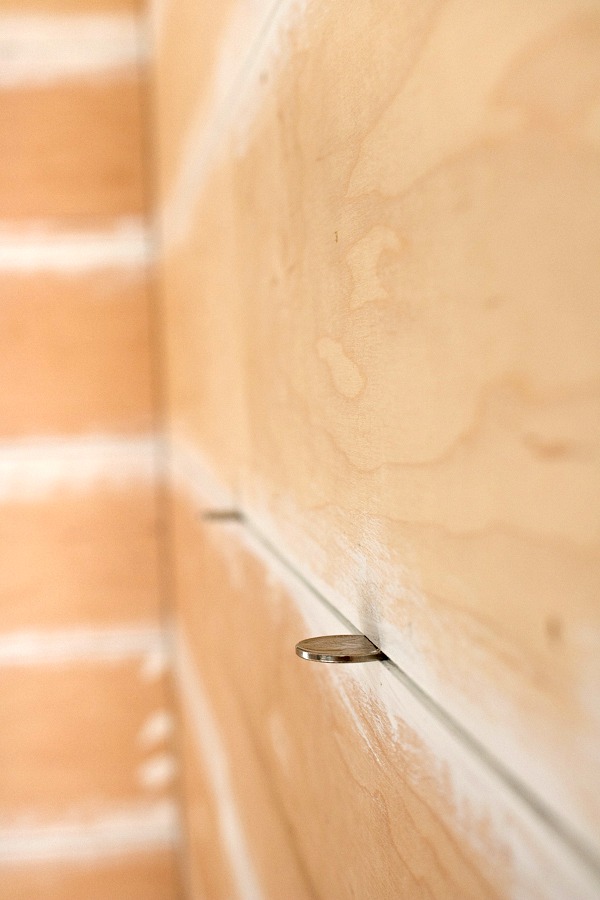
It’s important to keep the spacing between your wood strips consistent and an easy way to do that is with nickels! The amount of space you leave between boards is totally personal preference – if you want less spacing you can use pennies and if you want more spacing, use tile spacers.
The Key to Seamless Seams is Auto Body Filler
Unless you’re doing faux shiplap in a small room like a bathroom, you’re going to have vertical seams where one board ends and another begins. Some people don’t mind the look of the seams and leave them as-is but I wanted a look of seamless planks along the wall. Normally I would use wood filler for a project like this but my contractor gave me the great tip of using {this Bondo putty} – it sands just like wood filler but leaves a smoother finish and is less likely to crack over time. The auto body fillers come in two parts – you simply mix the putty with a little bit of the activation cream (I did this on a plastic plate),
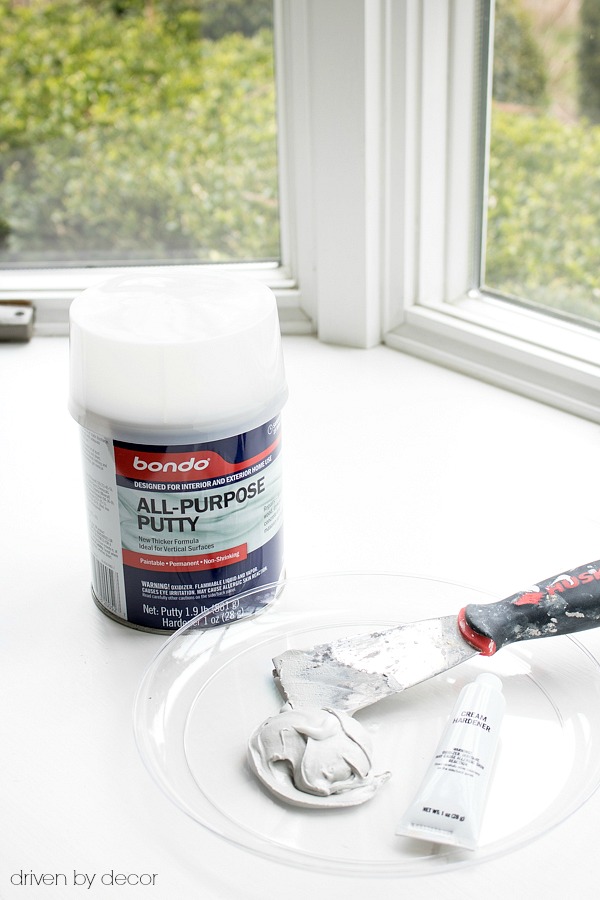
smooth it over the seam with a putty knife, and then sand smooth once it’s dry:
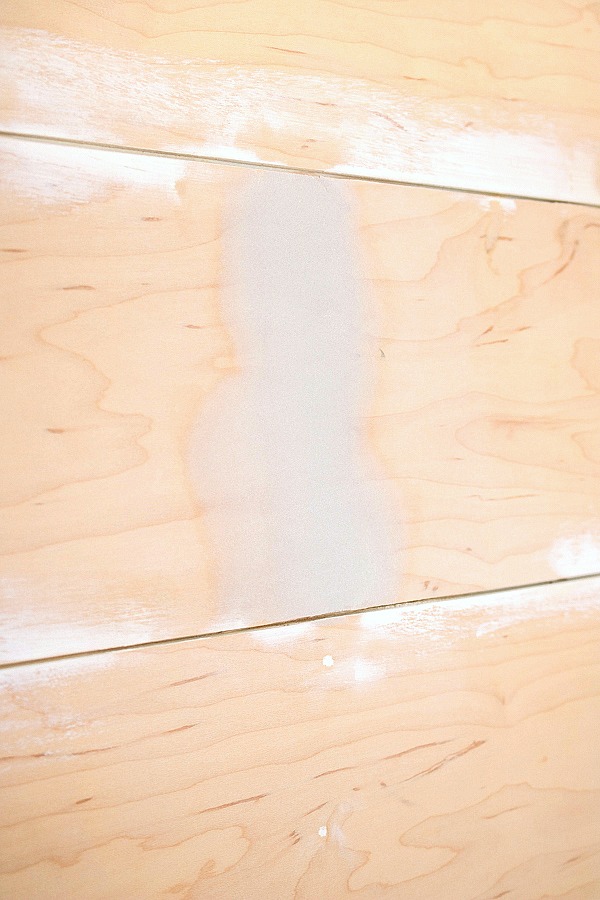
The only negative is that you have to work fast and only mix it in small batches because it hardens quickly.
Want to save this post?
That about covers it! I wrapped up the project by vacuuming the dust off the planks and out of the spaces between them and then I calked the corners and primed and painted the shiplap. It definitely wasn’t a quick project but I feel like I got the true shiplap look for a fraction of the cost and love my room as much today as the day that I finished it:
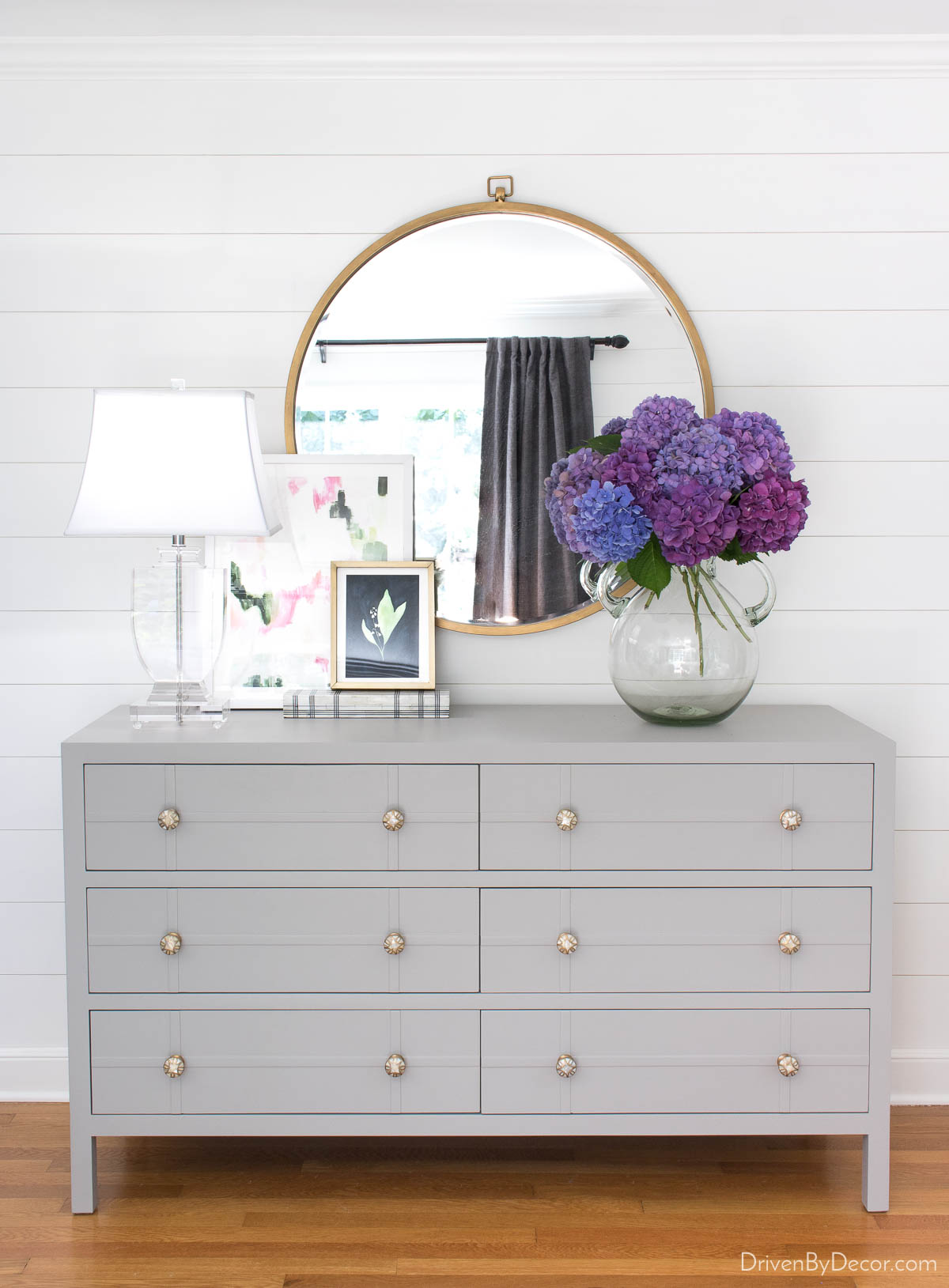
Sources: Dresser (no longer available) with these knobs | Large round mirror | Acrylic lamp | Colorful abstract print | Small lily print
Want to see another option for how to shiplap a room? Check out our bathroom shiplap project using pre-made MDF shiplap. It was slightly more expensive but was quicker to install and easier to paint. Also take a peak at our shiplap ceiling in the room off your kitchen – we’re so excited about how it turned out!
XO,



bohohavenhome says
Really love how clearly you explained the shiplap wall process—it makes DIY feel much less intimidating! I’ve been exploring more budget-friendly ways to refresh interiors, and this step-by-step guide is perfect.
Joy says
Loved the instructions. Was your wall perfectly flat and even? And if not, do the boards show up wavy or do they look perfectly flat?
We’re just wondering if the 1/4” plywood ever ‘undulates’ with the walls?
Jody says
Help. I want to do this in an inlet on my ceiling in my bedroom but my husband says I need to use 1/4 round around the edges. Is this true. I don’t want that look
Rebecca says
Both Home Depot and Lowes’ in my area said they would not rip boards to less than 1ft.
Angie says
Wow! I’d love to use this cheaper ship lapping method to do my ceilings at our lake cottage. Do you think this method would work? Also the ceiling is textured somewhat (not popcorn), do you think it would be noticeable through the tiny nickel-wide space?
Kris Jarrett says
Unfortunately, I actually don’t think this would work well for ceilings since it’s a thinner material and could bow if hung from a ceiling. You don’t necessarily have to use true shiplap, but I would use thicker wood boards that don’t have any flex in them. I’ve never seen it installed with the nickel gap on popcorn ceiling so I don’t know for sure but it seems to unlikely that you’d be able to tell in that tiny gap.
Sharyn says
Would you recommend using a paint sprayer to prime and paint the installed plywood? Would the paint get in the grooves easier than hand painting?
Using plastic sheeting to protect doorways and windows would be easy for us to do.
Thank you.
Kathy Henson says
I love the way your project turned out. I have been remodeling our 60 year old cinderblock lake home. All of the interior walls surrounding the house have exposed cinderblock. I removed all the interior 60 year old paneling. Now I’d like to put up shiplap. I am thinking about glueing and nailing directly to the cinderblock wall. If you have any suggestions for this application over cinderblock your replay would be appreciated. I am concerned that if I use vertical strips to support the shiplap these thinner pieces might look wavy.
Kris Jarrett says
I honestly don’t have any experience working with cinderblock but I would probably consider using PVC shiplap so you don’t have to worry about any warping issues with the wood or mdf shiplap being right up against cinderblock (which can hold moisture).
Terry says
How did you do the outside corners? Did you bevel them or just but them together?
Eileen Patterson says
Like to put a shipload in my bathroom or master bedroom which is better shiplap wallpaper or contact paper right now had a faux paint and would like to cover with wallpaper perk and stick it shiplap wallpaper which one is cheaper and would look different rather than painting.
Thank you
Deanna Harris says
I mean, how many maple sheets did it take for your room? Not the boards you cut approx 6” high… Sorry should have clarified.
Kris Jarrett says
It’s been several years since doing this project so unfortunately I don’t remember the specific number of sheets anymore!
Deanna Harris says
Love this, I am about to adventure shiplap into my kitchen and your blog was exactly what I needed. How many maple boards did it take?
Carina Vause says
If your using real wood (vs MDF) use a proper wood primer first or all the tannins in the wood will stain your paint over time. It looks terrible to have beige knot circles in white paint!
The paint plus primer people buy at the hardware store is drywall or paint primer not wood primer.
Carina Vause says
I apricate all your tips and hints. We’re planning this in our foyer this spring (when we can pre paint outdoors) your walls look great
Karen says
How long were your boards? Were you able to get an even cut using a table saw?
Brit says
This is amazing! I am going to try my accent wall in the spring! Can you share an average cost of doing this yourself?
Suzanne says
Hi! Love your room! Wondering where you bought your dresser even though it’s out of stock. Thanks!
Jennifer says
I want to do this in my living room, which is quite large. How big is the room and how much did it end up costing in total?